SOLUTIONS · ENTERTAINMENT & EVENTS
Entertainment & Events LED Displays
Explore LED display solutions for live shows, stages, cinemas, casinos and immersive venues. Start with the room, audience and production workflow, then compare the application guides below.
Discuss your event project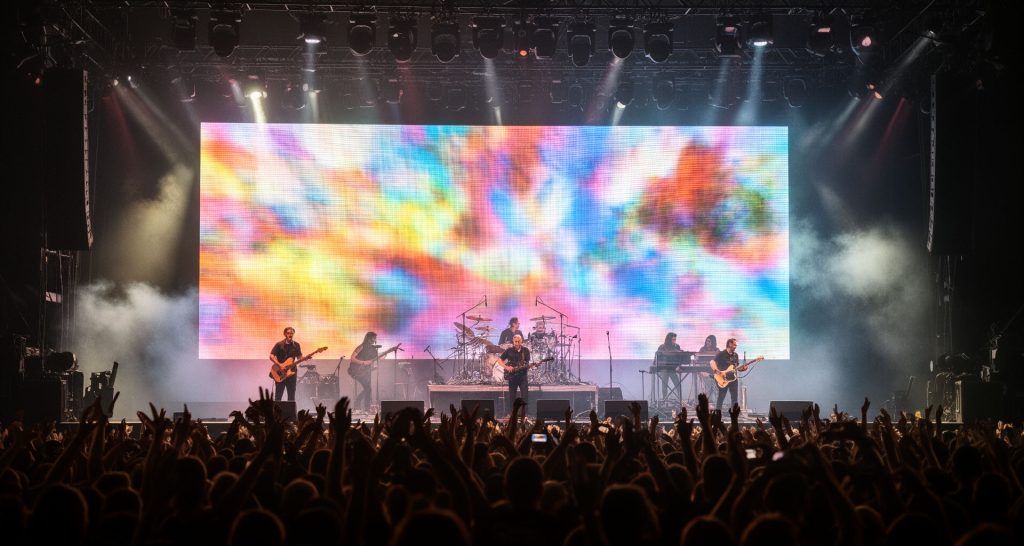
The event brief should lead the display design
For a one-night show, a touring production or a permanent entertainment venue, screen size is only one part of the decision. Identify what viewers must see, where they will see it from, what feeds the display and how the team will install, operate and service the system.
The stage image below illustrates a concert configuration. Use each application page to review its specific layout, content, control and delivery questions.
Start with five project inputs
Audience positions · room and screen dimensions · content and source list · installation window · operating and service owner
Choose the application that matches your venue
These guides focus on different event formats and should not be treated as interchangeable. Select the closest match to see the planning questions for that type of display.
Casino LED Display
Plan architectural, information and live-programming screens around casino zones, operating teams and guest sightlines.
Explore application →Cinema LED Screen
Compare lobby, auditorium and premium-format display needs, including viewing distance, room lighting and content presentation.
Explore application →Concert LED Screen
Plan stage, side and IMAG screens around audience sightlines, camera positions, show content and production timing.
Explore application →DJ Bar LED Display
Coordinate immersive visuals with DJ positions, lighting, dance-floor sightlines and the venue's content workflow.
Explore application →LED Big Screen for Stage
Size a main stage canvas for audience distance, live camera feeds, scenic content, rigging and production control.
Explore application →P2.604 Stage LED Video Wall
Review a fine-pitch stage wall for close viewing, detailed content, panel configuration and event-specific setup.
Explore application →Wedding LED Display
Plan display placement and content for ceremony, reception, stage backdrop, speeches and venue changeovers.
Explore application →Nightclub LED Screen
Balance high-impact visuals with room geometry, lighting effects, sightlines, service access and operating schedules.
Explore application →XR LED Screen
Coordinate an LED volume with camera tracking, lens and shutter behavior, color pipeline, content playback and virtual-production tests.
Explore application →Temporary event systems and permanent venue displays need different plans
Touring, rental and one-off events
Prioritize repeatable rigging, transport protection, clear cabinet labeling, fast setup and strike, spare inventory and known show-day responsibilities. Confirm who supplies processing, signal conversion, power distribution, content playback and on-site technicians.
Installed entertainment venues
Prioritize structural coordination, planned service access, ventilation, cable routes, permanent signal paths, operator training and a documented maintenance plan. Coordinate the display with architectural finishes, lighting, audio and venue operations.
If the venue hosts both types of events, define which parts of the system are permanent infrastructure and which are temporary show equipment.
Map the signal path before equipment is selected
A screen can be physically correct and still fail the show if source formats, processing, content mapping and operator responsibilities are unclear. Ask the production team and display supplier to review the same signal-flow plan.
Source and content
List media servers, playback computers, cameras, switchers, streaming sources and schedule feeds. Provide actual sample content and note whether text, live camera images or synchronized canvases matter most.
Processing and mapping
Record input/output formats, refresh and frame-rate requirements, processor capacity, canvas resolution and any curved or non-rectangular mapping. Test the real content and camera chain before production lock.
Control and fallback
Define who changes sources, selects presets and responds to faults. Document backup sources, spare signal paths and what should happen if a processor, player or connection becomes unavailable.
Rehearsal and handover
Build time for focus, calibration, camera checks, playback rehearsal and operator training. For installed venues, archive configuration files, screen maps and recovery steps.
What to include in an event LED display RFQ
The more specific the event brief, the easier it is to compare complete proposals on equal terms. Include drawings or photos when available and clearly label assumptions that require a site visit.
Audience and room
Venue plan, stage or feature location, seating and standing layouts, viewing distances, obstructions, room lighting, indoor/outdoor exposure and intended screen dimensions.
Show content and technology
Content examples, source devices, camera positions, signal formats, canvas layout, processor and control expectations, audio coordination and any live or synchronized feeds.
Delivery and responsibility
Load-in and strike schedule, rigging/access limits, receiving details, electrical scope, staffing, commissioning, spare equipment, training and the named person responsible for show operation.
Request an itemized equipment and labor scope with exclusions, drawings, signal-flow, commissioning steps and service assumptions.
Frequently asked questions
How do I choose an LED display for an event?
Start with audience distance, content detail, screen dimensions, viewing angles and venue light. Then plan mounting, processing, signal sources, operation and maintenance against the event schedule.
What information should I provide for a quote?
Share venue drawings or photos, screen locations and dimensions, audience positions, content examples, signal sources, operating dates, installation windows and service expectations.
Can the same LED wall be used for live cameras and graphics?
That depends on the content canvas, processing, source formats and production workflow. Review camera positions and the full signal chain with representative content before confirming the configuration.
Should I rent or permanently install an event LED display?
Rental can suit changing events and temporary venues; permanent installation can make sense when the location has recurring display needs. Compare lifecycle cost, setup frequency, storage, service and staffing.
What should be checked before show day?
Confirm rigging and access, electrical and signal paths, content resolution, playback and camera tests, backup plan, source switching, responsible operators and time for rehearsal.
Start with the venue and show plan
Send the event type, venue layout, audience distances, content sources and schedule. We can help identify the display and signal-flow details needed for a project-specific proposal.
Discuss your event project