TRANSPORTATION SOLUTIONS
LED Road Sign
Design an LED road sign around its purpose, street context and the way drivers, cyclists and pedestrians encounter it.
Explore Transportation SolutionsAn LED road sign is a road-facing device whose visibility and message must fit a specific location
Design around mixed road users
What to include in a project brief
Match the display to one clear road task
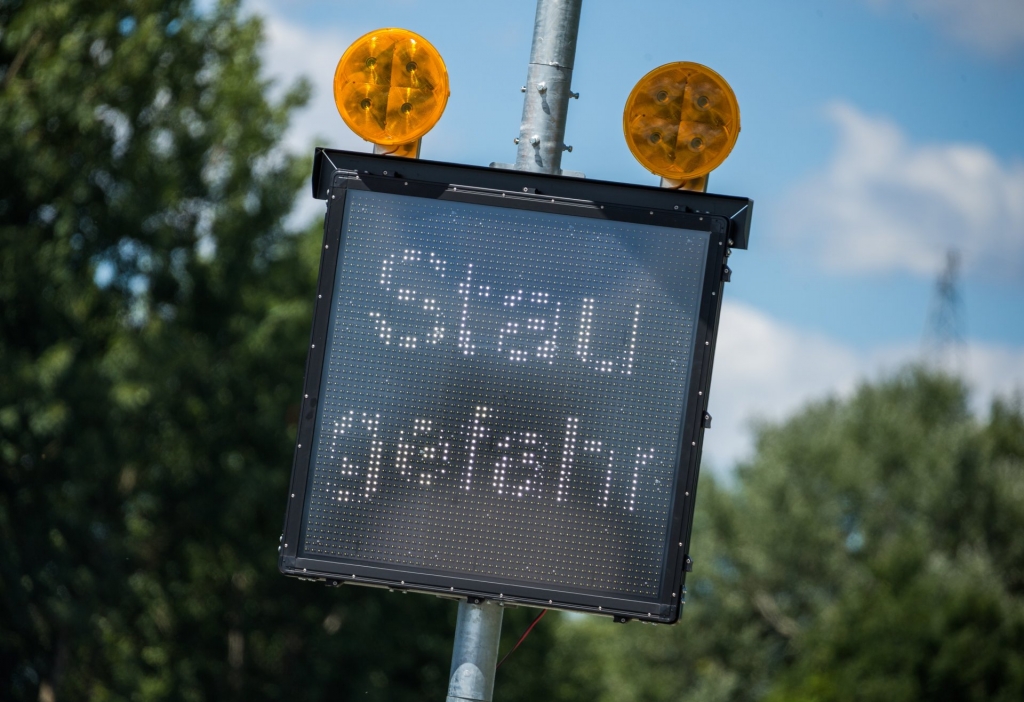
A street-level sign may provide a fixed warning, reinforce a crossing or show approved changing information. Map its role to the existing sign scheme, the people who need to see it and the action they should take.
Start with the road task and sign category
Before choosing a display, establish whether the project calls for an illuminated fixed sign, an approved variable message, a driver feedback device or a public information display. The distinction affects content governance, visibility targets and who must approve the installation.
Identify who needs to see the sign and from which approach.
Define whether its message is fixed, scheduled or triggered by an approved input.
Check how it fits the existing signs, crossings and road markings.
Design for the whole street scene
A sign that is readable in a workshop may be obscured on site. Review trees, parked vehicles, street furniture, headlamps, shop lighting and pedestrian movement from the actual approaches, both in daylight and after dark.
Approach visibility
Survey sight lines from vehicle, cycle and pedestrian approaches.
Day and night balance
Set brightness limits to suit the location, surrounding light and authority guidance.
Street conditions
Account for weather, cleaning and inspection access without obstructing a footpath or lane.
Coordinate mounting, power and public-realm works
Street installations depend on more than the LED face. Confirm ownership of the pole or wall, foundations and fixings, underground services, safe cable routes, isolation, drainage and traffic or pedestrian management before site work begins.
Site ownership and constraints
Confirm mounting rights, load limits and underground-service constraints.
Safe service access
Plan access, cleaning, inspection and fault response to limit disruption.
Four decisions to resolve before specifying the display
Purpose and authority
Define the sign category, the road task it supports, who owns the location and which authority approves its placement, face and operation.
Audience and visibility
Map driver, cyclist and pedestrian approaches. Note stopping or decision points, viewing angles, obstructions, nearby lighting and nighttime conditions.
Message and control
Decide whether content is fixed or variable. For changing content, specify approved messages, triggers, permissions, logging and expiry.
Installation and service
Coordinate mounting, foundation, utilities, power, communications, safe isolation, cleaning access and a service plan suited to the street.
Control changing content and define the safe state
For a changeable sign, document permitted messages, who may approve them, how updates are logged and when information expires. Decide what appears during a power, controller or network fault; the display should never leave road users with a stale or ambiguous instruction.
Approve the message set, triggers and operator roles.
Test update, message expiry and communications recovery.
Record inspection intervals, fault escalation and fallback behavior.
Build a project brief that supports a reliable quote
Location and approvals
Send a marked-up site plan, photos of each approach, proposed mounting point, asset owner and current authority or permit status.
Display and interface scope
Provide dimensions, content examples, control inputs, power and network availability, environmental exposure and the boundary between display supply and system integration.
Acceptance and upkeep
Agree visibility checks, brightness settings, content approval, fault response, operator handover, inspection access, spares and ongoing maintenance ownership.
Explore related road display solutions
LED Highway Sign
For overhead, high-speed roads where message readability and corridor control must be assessed at a longer approach distance.
Explore solutionElectronic Traffic Sign
Explore electronic signs for road guidance and approved traffic information.
Explore solutionTraffic LED Display
Review LED display applications across transport and traffic operations.
Explore solutionFrequently asked questions
Does every LED road sign need variable messages?
No. An LED sign may simply improve the visibility of a fixed face. Variable messages should be selected only when the road task requires them and the authority approves their content and operation.
Can an LED road sign replace a standard traffic sign?
That depends on the jurisdiction, sign category and approval. Confirm the permitted face, placement and operating rules with the responsible authority before specifying or installing a replacement.
What affects visibility on an urban street?
Approach direction, distance, mounting height, surrounding light, parked vehicles, trees, weather and competing signs all matter. Review the sign from the viewpoints of its intended road users and during both day and night conditions.
What should be agreed for a changeable sign?
Agree who owns the content, approved messages and triggers, update permissions, communications monitoring, expiry rules, fault behavior and a safe fallback before commissioning.
Plan an LED road sign around its purpose and street context
Share the location, intended road task, viewing approaches, mounting conditions and content requirements for a site-specific review.
Contact Highcolor