ROADWAY SIGN SYSTEMS
Electronic Traffic Sign
Plan electronic road signs around their approved purpose, the authority that controls each message and the behavior required when inputs or communications fail.
Explore Transportation Solutions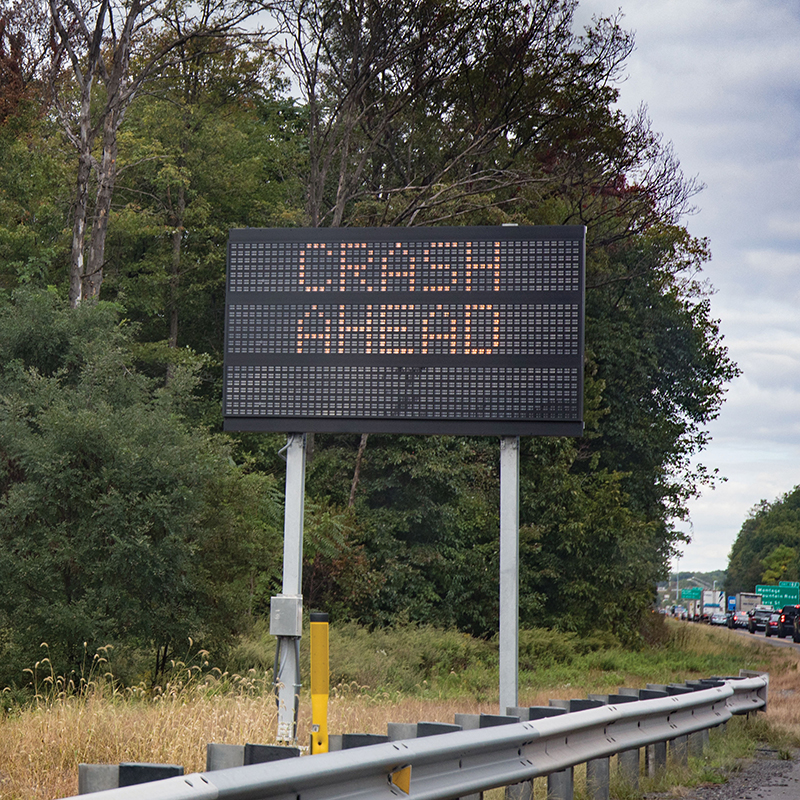
Make every displayed state traceable to an approved rule
Electronic signs communicate road information that can change with traffic, lane use or operating conditions. The authority should define which symbols, colors and messages are permitted, who can publish them and when each state is valid. Include an agreed behavior for loss of control or communications.
Define the sign's purpose, message rules and approval path
Specify reliability and a safe fallback
Prepare a project-specific supplier brief
Start with the authority and the sign's legal role
A dynamic display may supplement a regulatory sign, present advisory information or direct lane use under a specific traffic plan. The road authority determines its role, placement and permitted content. Do not assume that an LED panel is an approved substitute for a required static sign.
01
Identify the responsible authority and approving engineer.
02
Use the jurisdiction's approved symbols, colors and wording.
03
Document the trigger, priority and expiry for each message state.
Connect each message to its source and controller
The displayed state may come from a sensor, a central traffic-management system, an operator or a defined control strategy. Record the state table and interface path, including override priority, update timing, communications loss, stale data, restoration and operator notification.
Primary check
Map every allowed state to its source, trigger and authorized owner.
System checks
Define fail behavior, event and fault logging, and recovery checks.
Design for the roadside environment
Validate viewing distance and competing signs along the actual approach. Coordinate structure, foundation, wind and weather exposure, power, wiring and maintenance access with the site team. Ensure the electronic message does not conflict with nearby static or regulatory signs.
Survey approach geometry, sightlines and mounting positions.
Confirm structural, electrical and environmental requirements.
Plan safe inspection and repair access.
Four engineering questions to resolve
A complete design must connect the sign's role, message logic, roadside placement and operating support. Resolve these questions with the authority, integrator and site owner.
Message library & priority
List the permitted states and exact wording or symbol for each. Define priority during simultaneous events, who approves a change and how a message is removed when its trigger ends.
Data & control interfaces
Identify sensors, control centers, local controllers and software interfaces. Specify field mapping, update timing, permission boundaries, device identity and monitoring responsibilities.
Visibility & viewing conditions
Assess approach speed, distance, viewing angle, ambient light and competing signs. Confirm legibility with actual messages and approved visual treatments at representative scale.
Infrastructure & service
Coordinate mounting, power, network, environmental protection, inspection, replacement and service windows. Request clear project boundaries for civil, electrical, control and display work.
Commission each state and failure transition
Acceptance should test more than a static pattern. Exercise authorized commands, automatic triggers, message expiry, override priority, communications and power interruptions, return to normal operation and operator alerts. Record evidence for each state and confirm the sign matches the authority's approved behavior.
01
Run each approved message and priority scenario.
02
Validate controller timing, permissions and failure recovery.
03
Document commissioning results, training and support ownership.
What to include in an electronic traffic sign tender
A comparison-ready request describes the sign's purpose, operating rules and complete installed scope. Ask suppliers to state assumptions and exclusions so equipment, interface and field responsibilities are clear.
Site & function
Provide drawings, approach photos, intended sign role, permitted messages, trigger conditions, viewing positions, environmental exposure and authority contact.
System & interfaces
List data sources, controllers, network constraints, operator permissions, failure states, monitoring, control-room responsibilities and required integration documents.
Delivery & acceptance
Clarify structure, power, installation boundaries, applicable approvals, commissioning scenarios, testing evidence, training, maintenance access, spare parts and support.
Electronic traffic sign FAQs
Can sign message colors or symbols be chosen freely?
No. The road authority and applicable project requirements determine permitted colors, symbols, wording and behavior. Confirm approvals and evidence with the project engineer before procurement.
What happens if the data feed fails?
The project should specify an authority-approved fallback, alert and recovery process for each relevant failure. The sign should not continue presenting an unverified state without detection.
How is an electronic traffic sign different from a VMS?
A variable message sign is one type of electronic traffic sign, typically used for changing road messages. Other devices may provide lane control, speed feedback or warnings. The authority's approved function and message rules determine the correct category.
Who is allowed to change an electronic traffic sign message?
The road authority or its authorized operating team should define the roles, approval process and emergency permissions. Suppliers implement the access model specified for the project.
What should happen if the controller or data feed is lost?
Define a permitted fallback for each sign type, along with operator notification, event logging and restoration checks. The appropriate state depends on the sign's role and the authority's operating procedure.
Does every electronic road sign need the same certification?
Requirements depend on the sign function, installation jurisdiction, project documents and authority. Identify the applicable approvals and evidence with the project engineer before procurement rather than relying on a generic certification list.
What should be tested at handover?
Test each approved message state, triggers, priority, expiry, controller access, sensor or data inputs, failure and recovery behavior, viewing conditions, monitoring, operator training and maintenance procedures.
Compare related road display applications
If your project has a narrower purpose, these guides cover adjacent applications with their own operating questions.
Traffic LED Display
For changing traffic conditions and operational messages presented to drivers through an approved management workflow.
Traffic LED DisplayVariable Message Signs
For dynamic roadside messages, network operation and message governance across one or more locations.
Variable Message SignsRadar Warning Sign
For measured-speed feedback that supports driver awareness without replacing the road authority's enforcement process.
Radar Warning SignPlan an electronic traffic sign project
Share the sign's intended role, site, message states, data and controller interfaces, authority requirements and maintenance needs. Highcolor can help define the display and integration scope.
Contact Highcolor