Branching LED sculpture · design the structure and media together
Tree Horn LED Display
Create a sculptural LED display from a central trunk and tapered branches that open into distinct viewing zones. The project depends on more than its overall height: branch angles, junction details, active screen surfaces, structural support and content mapping must work as one coordinated design.
Send Drawing & Dimensions →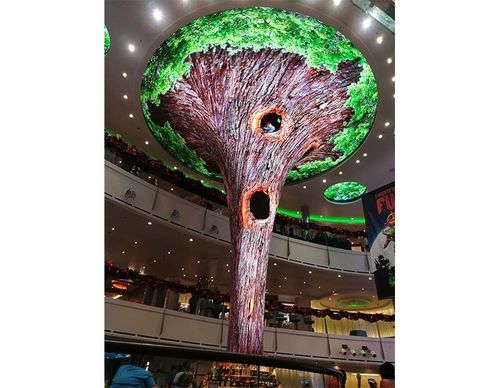
Definition
Define the Branching Form Before Choosing Modules
Decide how the display should read from the main audience positions: as an abstract branching sculpture, a wayfinding landmark or a tree-like focal point. Then specify the trunk, branch count, taper, opening angles, tip dimensions and junctions. Each branch may form its own viewing plane or connect visually to neighboring arms; the approved drawing should show which surfaces carry pixels and how the structure supports them.
For a recognizable tree silhouette organized around a canopy, compare the Wisdom Tree LED Display concept. This page focuses on a branching, tapered multi-zone form.
Engineering
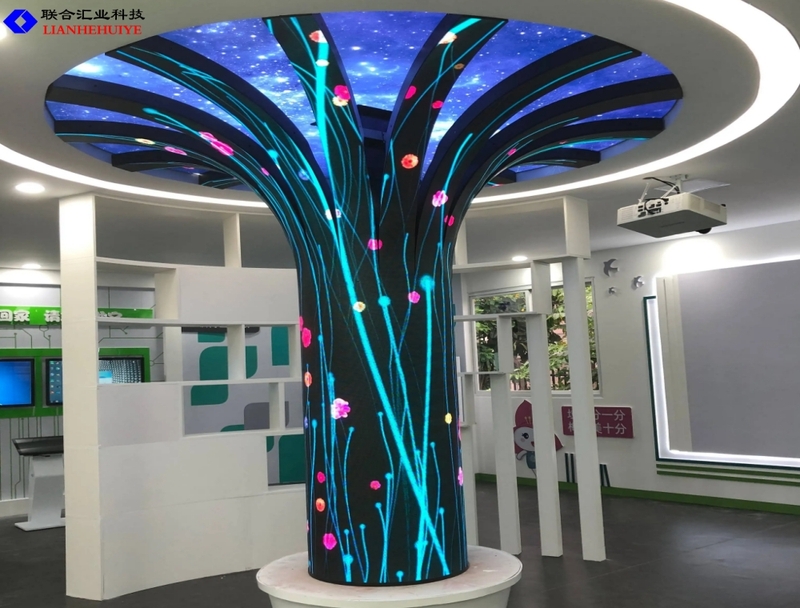
Engineering the Geometry of Tree Horn LED Display
Main trunk height
This dimension establishes the primary geometric envelope and should be fixed on the approved drawing.
Horn/branch count
This controls how the active LED surface is divided, supported or viewed in the finished installation.
Branch taper length
This value affects segmentation and should be coordinated with the intended viewer or host structure.
Branch opening angle
Record this explicitly so production does not infer the geometry from a concept rendering.
Tip diameter
This parameter helps define repeatable assembly references, alignment and the real pixel canvas.
Node/junction geometry
Maintenance must remain possible after the decorative structure and LED surface are fully installed.
Specification
Drawing Inputs Required for Branching Horn Sculpture
| Shape-specific engineering parameter | Value | Engineering use |
|---|---|---|
| Main trunk height | Project-defined / confirm by drawing | Required to engineer the branching horn sculpture geometry before production. |
| Horn/branch count | Project-defined / confirm by drawing | Required to engineer the branching horn sculpture geometry before production. |
| Branch taper length | Project-defined / confirm by drawing | Required to engineer the branching horn sculpture geometry before production. |
| Branch opening angle | Project-defined / confirm by drawing | Required to engineer the branching horn sculpture geometry before production. |
| Tip diameter | Project-defined / confirm by drawing | Required to engineer the branching horn sculpture geometry before production. |
| Node/junction geometry | Project-defined / confirm by drawing | Required to engineer the branching horn sculpture geometry before production. |
These are RFQ/engineering fields, not claimed Highcolor performance specifications. Exact dimensions, pitch, brightness, protection and module construction must be confirmed for the selected product platform.
Content & mapping
Map Content Across the Trunk, Branches and Junctions
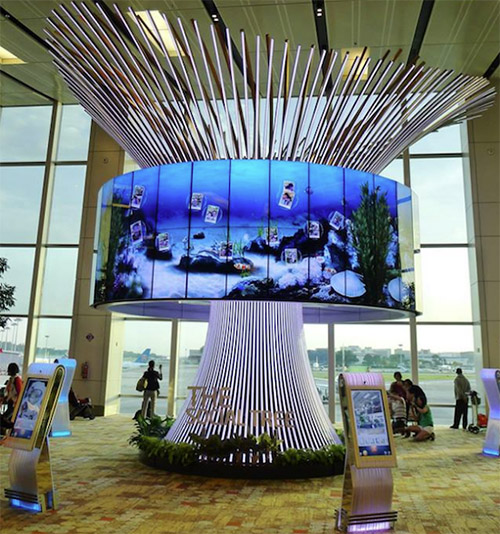
Create a controller map from the physical layout. Assign each branch a zone, document the orientation and pixel dimensions of each active surface, and mark inactive tips, trim and structural gaps. Decide whether media should flow continuously from the trunk into the branches or be composed as separate visual zones. Junctions deserve special attention: a continuous graphic can appear broken where surfaces meet unless the mapping and artwork account for the transition.
Use representative test patterns and sample motion before producing the full content package. A standard rectangular video may be used as a source, but it needs to be mapped to the approved branch geometry rather than stretched across an assumed rectangle.
Installation decision
Engineer the Trunk, Branch Supports and Service Route
Show the load path from each tapered arm through its junction and central trunk to the floor, ceiling or host structure. Confirm the structure and attachment details with the project engineer; the LED modules should not be used to correct misaligned supports. Plan how branches are lifted and secured in sequence, how power and data reach each zone, and how a technician can isolate and replace a section after decorative elements are installed.
The support design, installation method and maintenance access should be reviewed against the actual venue and structural requirements.
Cost drivers
What Changes the Cost of This Branching Horn Sculpture Project?
Project cost is shaped by the number and length of branches, how sharply each section tapers, junction construction, active pixel area, support structure and installation access. The media plan also matters: continuous content across connected surfaces can require more mapping and commissioning than separately addressed zones. Request a drawing-based proposal that identifies screen area, structural work, processing, installation and testing as distinct scope items.
Branch Count
More branches add active surfaces, connections and assembly steps.
Tapered Custom Sections
Tapers and unique arm shapes may need custom sections and careful edge finishing.
Junction Complexity
Junctions must align structure, seams, cabling and visual transitions.
Multi-Zone Content Mapping
Continuous graphics require coordinated maps and tests across several viewing planes.
Drawing review
How to Review the Tree Horn LED Display Drawing Before Production
Use the production drawing to align visual intent with measurable fabrication information. Check the finished trunk height, branch count and orientation, taper lengths, opening angles, tip sizes, junction construction, active LED boundaries, mounting interfaces and service route. Show how each component is referenced and connected, and resolve site conditions before fabrication so the installation crew is not asked to infer geometry from a rendering.
Main trunk height
Main trunk height is a controlling envelope dimension for Tree Horn LED Display. Use the installed finished dimension and identify any trim, structural clearance or non-LED border separately so the active pixel area is not confused with the overall object size. The approved value should be shared by mechanical, control and content teams.
Horn/branch count
Horn/branch count is a shape-specific project input for Tree Horn LED Display. Put the confirmed value on the controlled drawing and use the same value for structure, segmentation, installation references and commissioning. Tolerance should be agreed where neighboring architecture or decorative finishes are already fixed.
Branch taper length
Branch taper length is a controlling envelope dimension for Tree Horn LED Display. Use the installed finished dimension and identify any trim, structural clearance or non-LED border separately so the active pixel area is not confused with the overall object size. A site measurement and fabrication drawing should resolve any conflict before manufacturing.
Branch opening angle
Branch opening angle fixes the relationship between adjacent surfaces. Record the design angle on the fabrication drawing so corner hardware, seam alignment and pixel mapping are based on the same datum. This is one of the dimensions that should appear in the RFQ rather than being left to supplier interpretation.
Tip diameter
Tip diameter controls the wrap length, segmentation count and geometric closure of Tree Horn LED Display. It should be measured from the finished host or approved fabrication drawing, not estimated from a rendering. Changing it late can affect several downstream parts, so revision control matters.
Node/junction geometry
Node/junction geometry is a shape-specific project input for Tree Horn LED Display. Put the confirmed value on the controlled drawing and use the same value for structure, segmentation, installation references and commissioning. For replacement or retrofit work, measure the existing condition instead of relying only on legacy drawings.
FAQ
Tree Horn LED Display Engineering FAQ
What drawing is needed to quote Tree Horn LED Display?
Send a dimensioned sketch, CAD model or elevation showing main trunk height, horn/branch count and the active LED area. A reference image alone is not enough for final engineering.
Which geometry dimension controls Tree Horn LED Display most strongly?
Start with main trunk height and horn/branch count. The engineering team also needs branch taper length before module segmentation is frozen.
How should pixel mapping be prepared for Tree Horn LED Display?
Map the real active surface rather than forcing a standard 16:9 canvas. The controller map should follow the approved geometry, seams and inactive zones of this branching horn sculpture project.
What service-access issue is specific to Tree Horn LED Display?
Access must be planned around node/junction geometry. Components that become trapped behind the finished geometry should be identified before the support structure is released.
What usually changes the cost of Tree Horn LED Display?
The largest geometry-related variables are branch count, tapered custom sections, junction complexity and multi-zone content mapping. LED pitch and total active area also affect the final quotation.
Internal selection links
Compare Shapes With Different Engineering Intent
A visual background layer designed around camera, stage or display composition rather than a standalone geometric object.
A half-spherical led surface with a defined rim plane, projection depth and mounting interface.
A tree-inspired led sculpture combining trunk, branch/canopy geometry and digital surfaces into a landmark installation.
Scope a Tree Horn LED Display From Its Drawing
Share a dimensioned sketch or CAD drawing with trunk height, branch count and angles, taper lengths, tip diameters, junction details, mounting method and active LED zones. Add the venue, viewing positions, content concept, operating conditions and maintenance access needs to support a practical project review.
Request Engineering Review →