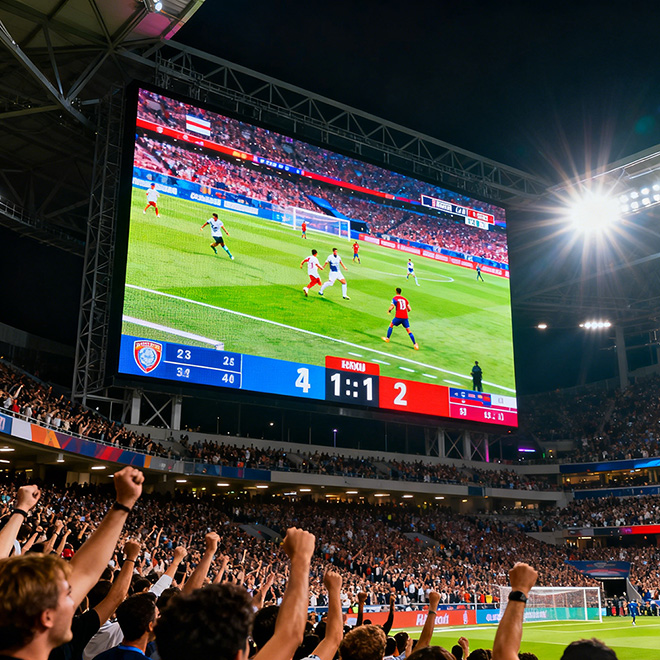
Filled circular LED surface · define diameter, pixel area and edge geometry
Round LED Display
A Round LED Display is a filled circular video surface, engineered from its active diameter, center reference and usable pixel area. It suits feature walls, stage backdrops, retail environments and architectural focal points where content must read across a true circular canvas. The project drawing should distinguish the illuminated circle from its trim, frame and mounting structure.
Send Drawing & Dimensions →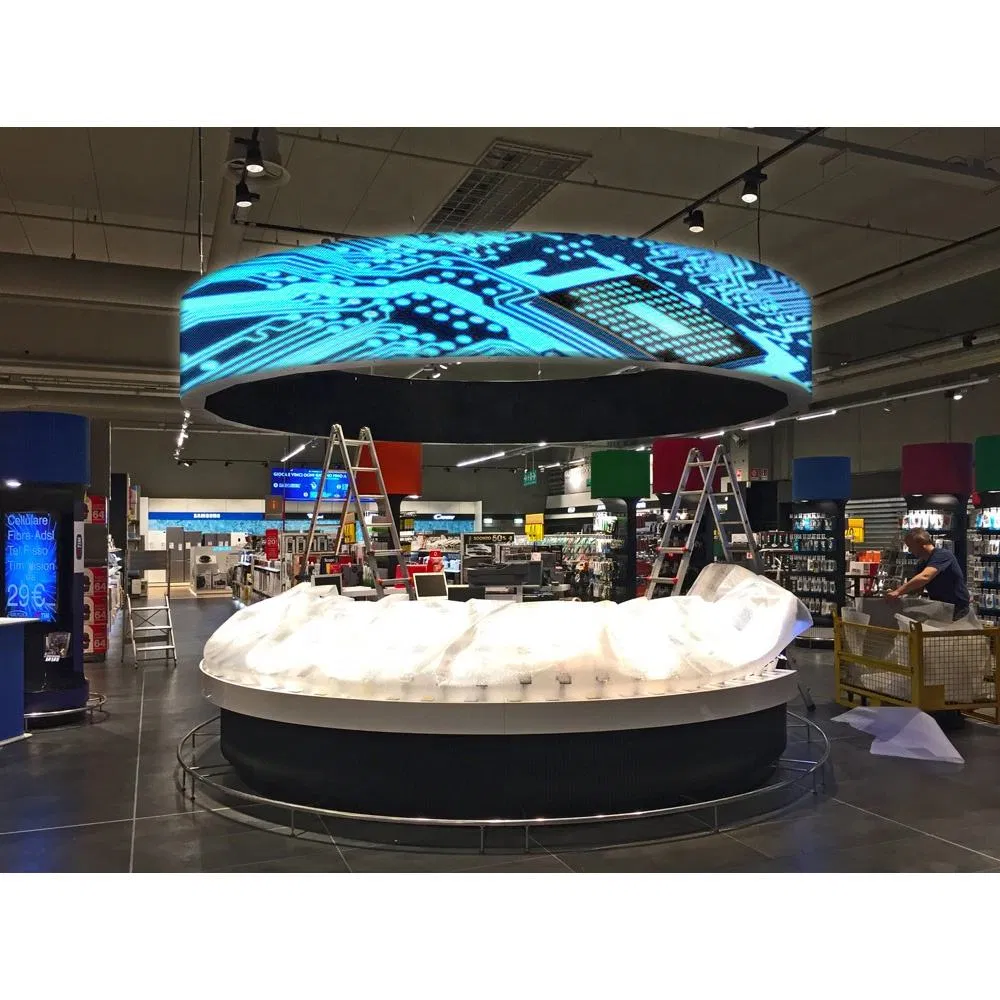
Definition
Define the Active Circle and Edge Before Choosing Modules
Start by separating the active LED circle from the finished outer diameter. The active area determines what viewers see; trim, bezel and support can extend beyond it. A center datum and a controlled perimeter drawing then guide the module layout, cabinet segmentation and image map.
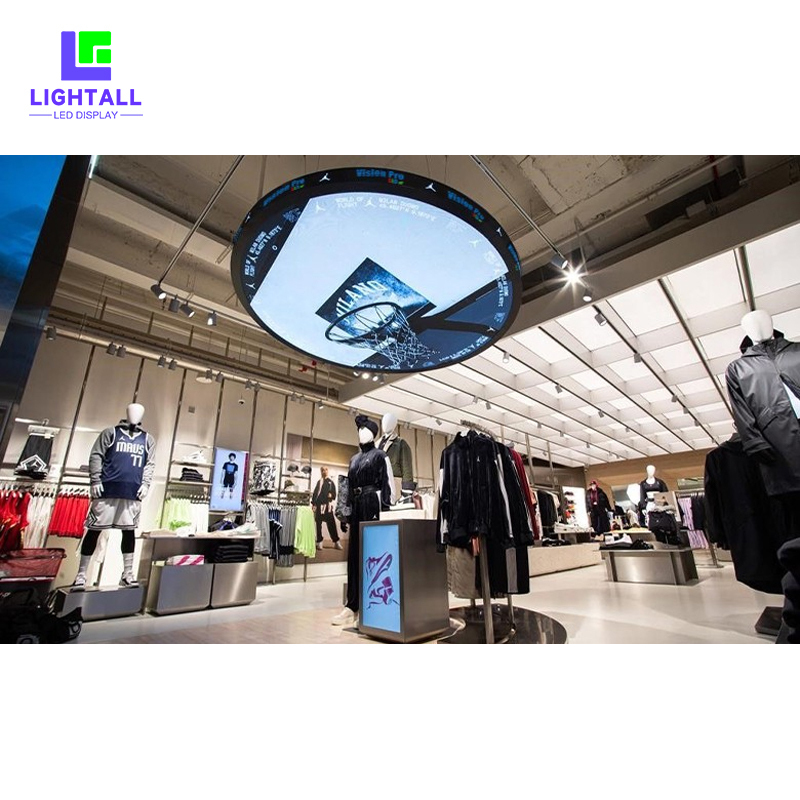
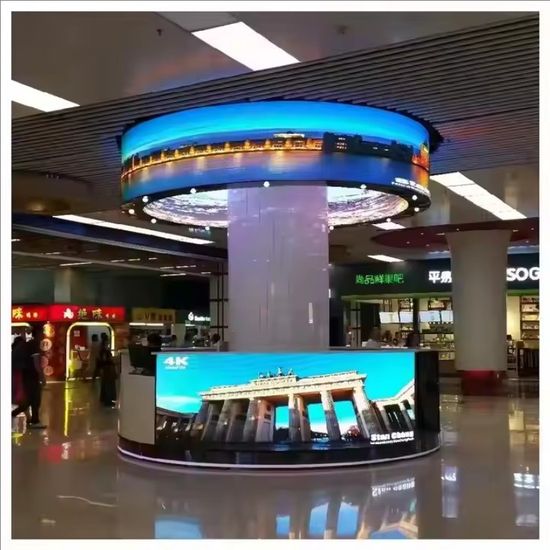
This page covers a filled circular screen. If the design leaves an open center and displays content only around a circular band, compare it with the Circle LED Sign instead.
Engineering
Engineering the Geometry of Round LED Display
Active diameter
Set the visible LED diameter separately from the overall finished diameter. This prevents trim or frame dimensions from being mistaken for active picture area.
Circle center position
Mark the circle center against fixed site datums. The same reference should be used for the supporting frame, panel layout and installation survey.
Edge segmentation size
Show where the circumference is divided into modules or cabinet segments. Joint positions and tolerances affect how cleanly the perimeter closes.
Usable pixel diameter
The illuminated pixel boundary can differ from the mechanical circle. Record the usable pixel diameter and any inactive edge so content and controller mapping match the built screen.
Mounting depth
Confirm the finished projection from the mounting surface, including the screen, ventilation space, frame and rear cabling needed at the site.
Front/rear service clearance
Specify how each module, receiving component and power supply will be reached after installation. Preserve the service route in the finished architectural build.
Specification
Drawing Inputs Required for Filled Circular Screen
| Shape-specific engineering parameter | Value | Engineering use |
|---|---|---|
| Active diameter | Project-defined / confirm by drawing | Required to engineer the filled circular screen geometry before production. |
| Circle center position | Project-defined / confirm by drawing | Required to engineer the filled circular screen geometry before production. |
| Edge segmentation size | Project-defined / confirm by drawing | Required to engineer the filled circular screen geometry before production. |
| Usable pixel diameter | Project-defined / confirm by drawing | Required to engineer the filled circular screen geometry before production. |
| Mounting depth | Project-defined / confirm by drawing | Required to engineer the filled circular screen geometry before production. |
| Front/rear service clearance | Project-defined / confirm by drawing | Required to engineer the filled circular screen geometry before production. |
This table lists project inputs for quoting and engineering, not fixed Highcolor product specifications. Confirm pitch, brightness, protection rating, module construction and electrical details against the selected platform and installation environment.
Content & mapping
Map Content to the Usable Circular Pixel Area
A round screen still receives content from a rectangular video workflow, but the controller map must identify which source pixels land on the circular display. Define the active pixel boundary, center coordinates, segment joins and any masked edge before producing final artwork.
Preview logos, text and motion graphics against the actual circular mask. Keep essential content away from the perimeter, then test a calibration pattern to reveal alignment, seams and edge clipping at the intended viewing distance.
Installation decision
Plan the Support Frame and Service Route
The circular face needs a stable support that holds its center and perimeter accurately; LED modules should not be used to compensate for an uneven frame. Coordinate the mounting plane, segment joints, lifting or installation sequence, ventilation and cable paths with the site team. Confirm front or rear access before surrounding finishes make components difficult to reach.
For an open-center circular band rather than a filled screen, compare the Circle LED Sign layout.
Cost drivers
What Changes the Cost of This Filled Circular Screen Project?
A circular project is priced from its physical and pixel geometry as well as the selected LED platform. The main variables are active diameter, pixel pitch, perimeter segmentation, support structure, finish and the access needed for installation and future service; a reliable quote needs these inputs on the same drawing.
Diameter
A larger active diameter increases illuminated area and usually affects the number of modules, supporting structure and installation effort.
Edge-Cut/Segmentation Method
The chosen panel layout and edge treatment determine how the circular boundary is formed, where joins fall and how much custom fabrication is required.
Pixel Density
Pitch should be selected for viewing distance and content detail. A finer pixel pitch increases pixel count over the same circular area and changes the system selection.
Finish Around The Circular Perimeter
A flush perimeter, decorative trim or integrated enclosure each has different fabrication and finishing requirements. Confirm the visible edge with the architect before production.
Drawing review
How to Review the Round LED Display Drawing Before Production
Before production, check that the controlled drawing connects the visual brief to buildable dimensions: finished and active diameters, center datum, pixel boundary, segment joints, mounting plane, edge finish and service access. Confirm the controller map and revision match that drawing.
Active diameter
Active diameter controls the wrap length, segmentation count and geometric closure of Round LED Display. It should be measured from the finished host or approved fabrication drawing, not estimated from a rendering. Changing it late can affect several downstream parts, so revision control matters.
Circle center position
Circle center position is a shape-specific project input for Round LED Display. Put the confirmed value on the controlled drawing and use the same value for structure, segmentation, installation references and commissioning. For replacement or retrofit work, measure the existing condition instead of relying only on legacy drawings.
Edge segmentation size
Edge segmentation size is a shape-specific project input for Round LED Display. Put the confirmed value on the controlled drawing and use the same value for structure, segmentation, installation references and commissioning. The approved value should be shared by mechanical, control and content teams.
Usable pixel diameter
Usable pixel diameter controls the wrap length, segmentation count and geometric closure of Round LED Display. It should be measured from the finished host or approved fabrication drawing, not estimated from a rendering. Tolerance should be agreed where neighboring architecture or decorative finishes are already fixed.
Mounting depth
Mounting depth is a controlling envelope dimension for Round LED Display. Use the installed finished dimension and identify any trim, structural clearance or non-LED border separately so the active pixel area is not confused with the overall object size. A site measurement and fabrication drawing should resolve any conflict before manufacturing.
Front/rear service clearance
Front/rear service clearance defines how technicians reach receiving cards, power supplies, modules and internal connections after installation. The access route must remain usable after decorative cladding and adjacent construction are complete. This is one of the dimensions that should appear in the RFQ rather than being left to supplier interpretation.
FAQ
Round LED Display Engineering FAQ
What drawing is needed to quote Round LED Display?
Send a dimensioned sketch, CAD model or elevation showing active diameter, circle center position and the active LED area. A reference image alone is not enough for final engineering.
Which geometry dimension controls Round LED Display most strongly?
Start with active diameter and circle center position. The engineering team also needs edge segmentation size before module segmentation is frozen.
How should pixel mapping be prepared for Round LED Display?
Map the real active surface rather than forcing a standard 16:9 canvas. The controller map should follow the approved geometry, seams and inactive zones of this filled circular screen project.
What service-access issue is specific to Round LED Display?
Access must be planned around front/rear service clearance. Components that become trapped behind the finished geometry should be identified before the support structure is released.
What usually changes the cost of Round LED Display?
The largest geometry-related variables are diameter, edge-cut/segmentation method, pixel density and finish around the circular perimeter. LED pitch and total active area also affect the final quotation.
Internal selection links
Compare Shapes With Different Engineering Intent
A circular digital sign optimized for branded messages, logos or short-form content rather than a large immersive round video surface.
A half-spherical led surface with a defined rim plane, projection depth and mounting interface.
A made-to-drawing led project used when standard cabinet geometry cannot satisfy the required object, surface or installation.
Quote Round LED Display From the Drawing, Not the Name
Send the geometry, dimensions, viewing distance, indoor/outdoor condition, mounting interface, content concept and service-access requirement.
Request Engineering Review →