Circular LED signage · brand visibility from the approach
Circle LED Sign
A Circle LED Sign puts a logo, short message or visual on a circular illuminated face. Unlike a large circular video wall, it is designed to work as a sign: passers-by should recognize the brand quickly, whether they see the display head-on or from the side. The key decisions are the visible image area, the mounting position, the viewing direction and whether the sign needs one or two active faces.
Send Drawing & Dimensions →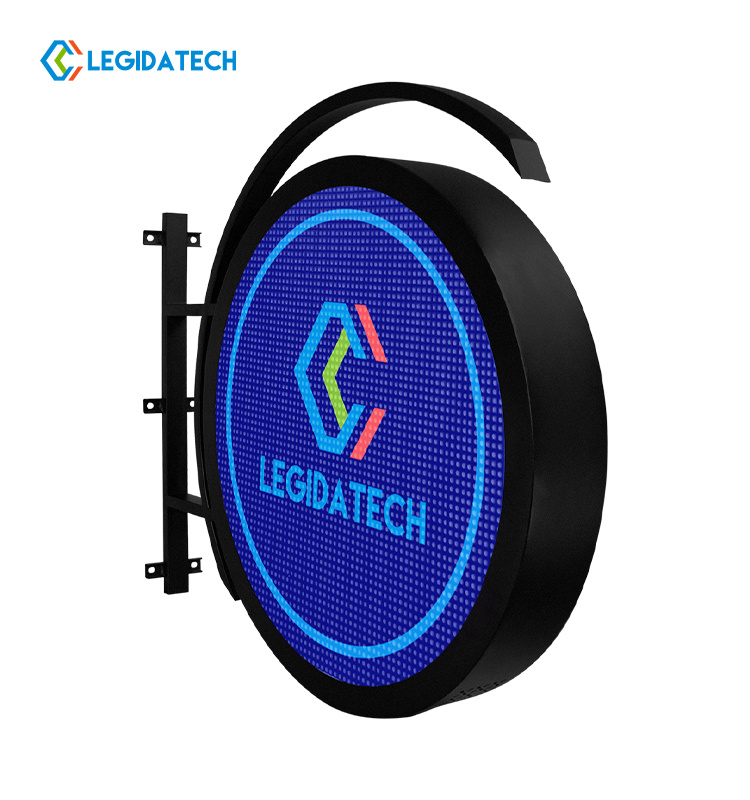
Definition
Design the Sign Around What People Need to Recognize
Begin with the viewing situation: where people approach, how far away they are and how long they have to read the message. Then define the outer housing diameter, the active image circle and a safe area for logos or short text. These are separate dimensions; the frame can be larger than the illuminated face.
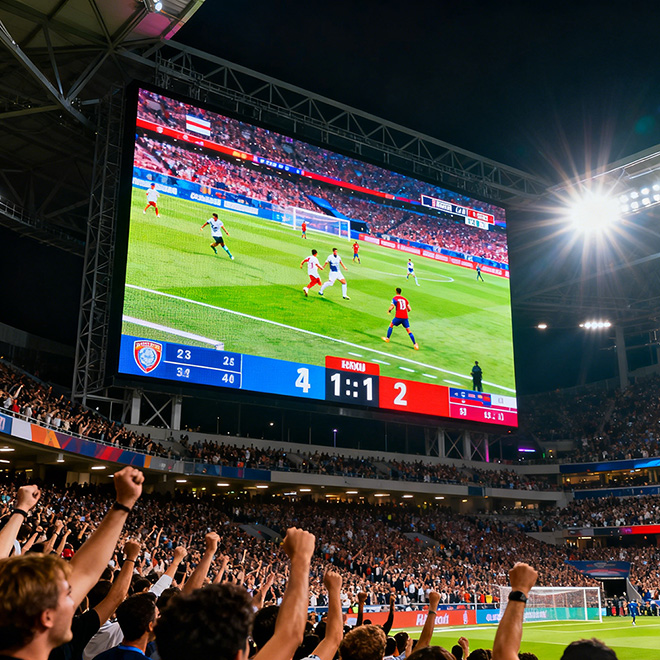
For a larger circular video surface intended to fill the viewing area with dynamic content, see Round LED Display. Circle LED Sign focuses on concise brand and wayfinding messages.
Engineering
Engineering the Geometry of Circle LED Sign
Sign outer diameter
The finished outside measurement includes the housing and trim. Record the visible circular face separately so the sign does not appear larger or smaller than intended on the façade.
Active image diameter
This is the illuminated circle available for logos and messages. Keep critical marks inside a defined safe area to allow for the display boundary, mounting trim and any optical margin.
Sign thickness
Include the full projection from the mounting surface, including enclosure, bracket and clearance for cabling. This matters when a sign sits above a walkway or beside a door.
Mounting bracket position
Locate the bracket against the host wall, pole or canopy structure. The drawing should show fixing points and the direction the face presents to approaching viewers.
Logo/text safe area
Set a margin for circular logos and short text so letters do not crowd the edge. Test the artwork at its final pixel dimensions before approval.
Viewing angle from approach
Consider both the intended approach and oblique views. For a projecting sign, decide whether one visible face is sufficient or whether a second active face is needed for people coming from the opposite direction.
Specification
Specify a Circle LED Sign From the Site and Artwork
| Shape-specific engineering parameter | Value | Engineering use |
|---|---|---|
| Housing outer diameter | Project-defined / confirm by drawing | Sets the physical footprint and helps coordinate the sign with the façade, doorway or pole. |
| Active image diameter | Project-defined / confirm by drawing | Defines the visible pixel area available for the logo or message. |
| Overall sign projection | Project-defined / confirm by drawing | Confirms clearance from the wall or pole, including enclosure and bracket. |
| Bracket and fixing locations | Project-defined / confirm by drawing | Coordinates the sign orientation and attachment with the host structure. |
| Logo and text safe area | Project-defined / confirm by drawing | Protects important artwork from edge clipping and maintains clear spacing. |
| Approach direction and face count | Project-defined / confirm by drawing | Guides orientation and the choice between one or two active faces. |
This is a project-input schedule, not a claim of fixed Highcolor product specifications. Confirm pitch, brightness, outdoor protection, control method and electrical requirements for the selected sign and its installation location.
Content & mapping
Make the Logo and Message Read Clearly on a Round Face
Prepare artwork on the actual circular pixel canvas. A logo designed for a rectangle may lose spacing or become cramped when forced into a round boundary, so confirm scale, line weight and safe margins at final resolution.
Use one concise idea per screen: a brand mark, short offer or directional cue. Review the sign from the main approach and from an oblique angle; check contrast, edge clipping and whether motion makes the message harder to catch.
Installation decision
Select the Mounting Style and Service Route
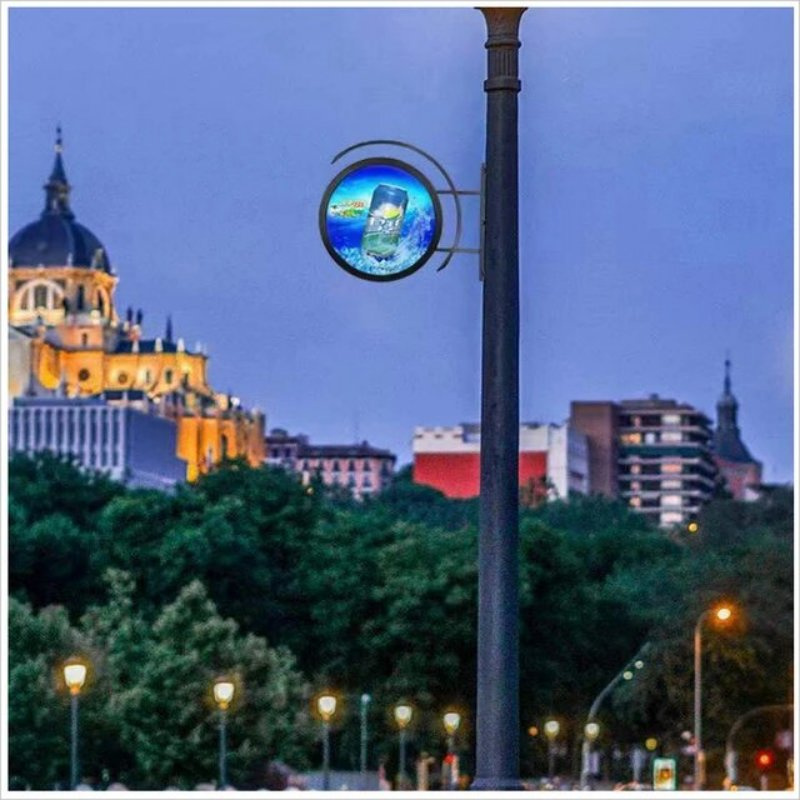
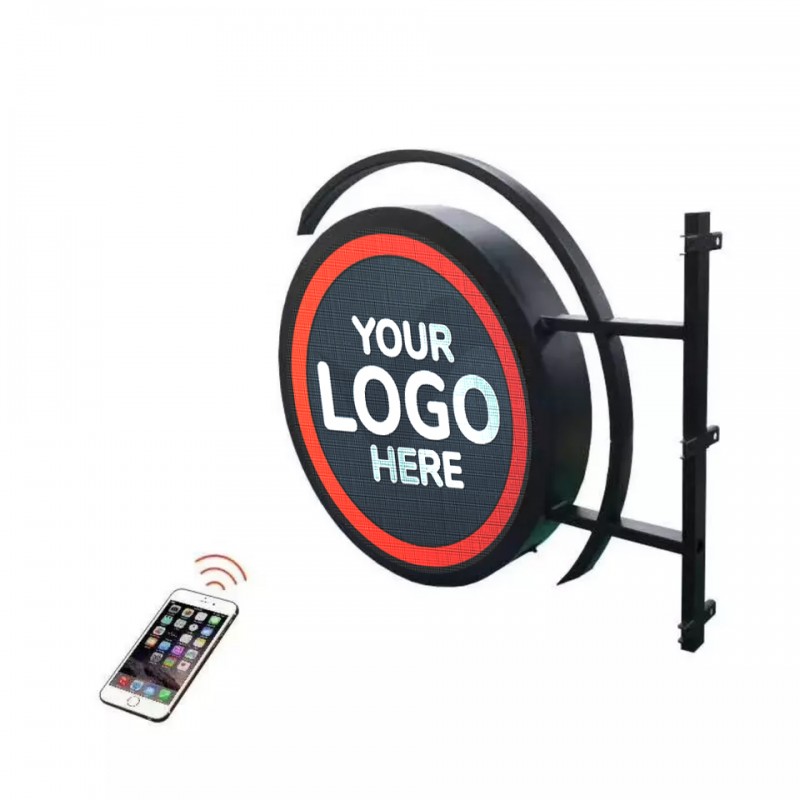
The installation may be wall-mounted, projecting from a façade, suspended or fixed to a freestanding support. Choose the arrangement from the site’s structure and sightlines, not just from the sign’s appearance. Document fixing points, cable entry, wind exposure where relevant, and how the enclosure opens for maintenance. If two-way visibility matters, decide early between a single- and double-sided configuration.
For a full-face circular video installation rather than a compact brand sign, compare Round LED Display.
Cost drivers
What Changes the Cost of This Circular Signage Project?
The quote depends on the sign’s size and active face, required pixel detail, housing and finish, mounting hardware, controls, and the installation environment. A second active face, custom bracket or difficult cable route can change the scope, so include these details with the artwork and site measurements.
Sign Diameter
The outer size sets the visual footprint and affects housing and support. State the active image diameter separately.
Pixel Density For Text/Logo
Choose the pixel pitch for the expected viewing distance and the detail in the logo. Fine text may need more pixels than a simple, bold symbol.
Housing Finish
A painted enclosure, trim ring or integrated architectural finish changes fabrication and how the sign meets the building.
Single/Double-Sided Mounting
A second active face can improve visibility from opposing directions, while also changing the enclosure, support and control arrangement.
Drawing review
How to Review the Circle LED Sign Drawing Before Production
Check these sign-specific details before fabrication: overall housing diameter, illuminated face, bracket location, sign projection, artwork safe area, approach direction and service opening. Match the artwork revision to the pixel map, and confirm that the mounting plan suits the actual wall, pole or canopy.
Sign outer diameter
Confirm the outside dimension that viewers will see, including trim and enclosure. Compare it with the façade elevation and available mounting space so the sign remains legible without obstructing doors, windows or pedestrian routes.
Active image diameter
The active image circle determines the area available for the logo or message. Use it to check the final artwork scale and leave a deliberate margin between important content and the edge.
Sign thickness
Record the sign’s projection from the mounting face. Allow for the enclosure, bracket and cable path, then check clearance against nearby architecture and pedestrian movement.
Mounting bracket position
Show bracket centerlines, fixing positions and the face orientation on the elevation. These details let the installer align the sign with the intended viewing route and the host structure.
Logo/text safe area
Define a circular artwork safe area with space for the full logo, text and any required brand clear space. Test it on the final pixel canvas rather than relying on a cropped preview.
Viewing angle from approach
Mark the principal approach and any important side view. This determines face orientation and helps decide whether one or two active faces are appropriate for the site.
FAQ
Circle LED Sign Engineering FAQ
Should a Circle LED Sign be single-sided or double-sided?
Choose from the viewer routes. A wall-mounted face may serve one approach, while a projecting or freestanding sign may need visibility from both directions. Confirm face orientation and active-face count on the site elevation before the enclosure is designed.
What artwork should be supplied for a circular LED sign?
Provide the approved logo artwork and any message, preferably as a vector master, plus brand colors and usage rules. The final artwork should be checked on the actual circular pixel map with a safe margin so letters and marks are not clipped at the edge.
What measurements are needed before requesting a quote?
Share the housing outer diameter, active image diameter, sign projection, bracket or fixing locations, viewing direction, one- or two-sided requirement and installation environment. A site photo or elevation helps clarify nearby doors, glazing and other obstructions.
Can the same Circle LED Sign be used outdoors?
Outdoor suitability depends on the selected product configuration and site exposure. State whether the sign will face rain, direct sun, dust or coastal conditions so the required enclosure, brightness and electrical protection can be confirmed for that project.
What affects logo readability on a round LED sign?
Viewing distance, pixel pitch, logo complexity, line thickness and the active image diameter all matter. Review a scaled preview on the intended circular pixel canvas and simplify small text or fine details if they do not remain clear from the approach.
Internal selection links
Compare Shapes With Different Engineering Intent
A filled circular led image surface defined by diameter and edge segmentation rather than a rectangular canvas.
A triangular led surface or assembly defined by three edges, corner angles and non-rectangular pixel boundaries.
A six-sided led surface or tiled honeycomb system controlled by side length, corner angles and cell-to-cell alignment.
Request a Circle LED Sign Quote With the Site Details
Share the sign dimensions, artwork, viewing direction, mounting surface, indoor or outdoor conditions and preferred one- or two-sided layout for an engineering review.
Request Engineering Review →