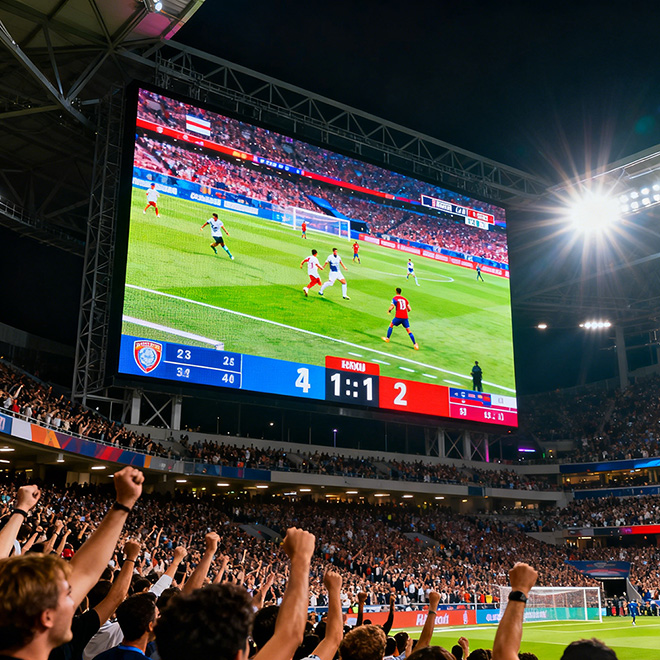
Immersive LED dome · define the curvature and viewing envelope
LED Dome Display
An LED Dome Display curves the image over an overhead or enclosing surface to create an immersive field of view. The design must define more than a diameter: dome rise, coverage angle, viewing direction and panel segmentation determine how the screen fits the room and how content maps onto it. This format suits planetariums, immersive venues, exhibitions and themed spaces where the curved surface is central to the experience.
Send Drawing & Dimensions →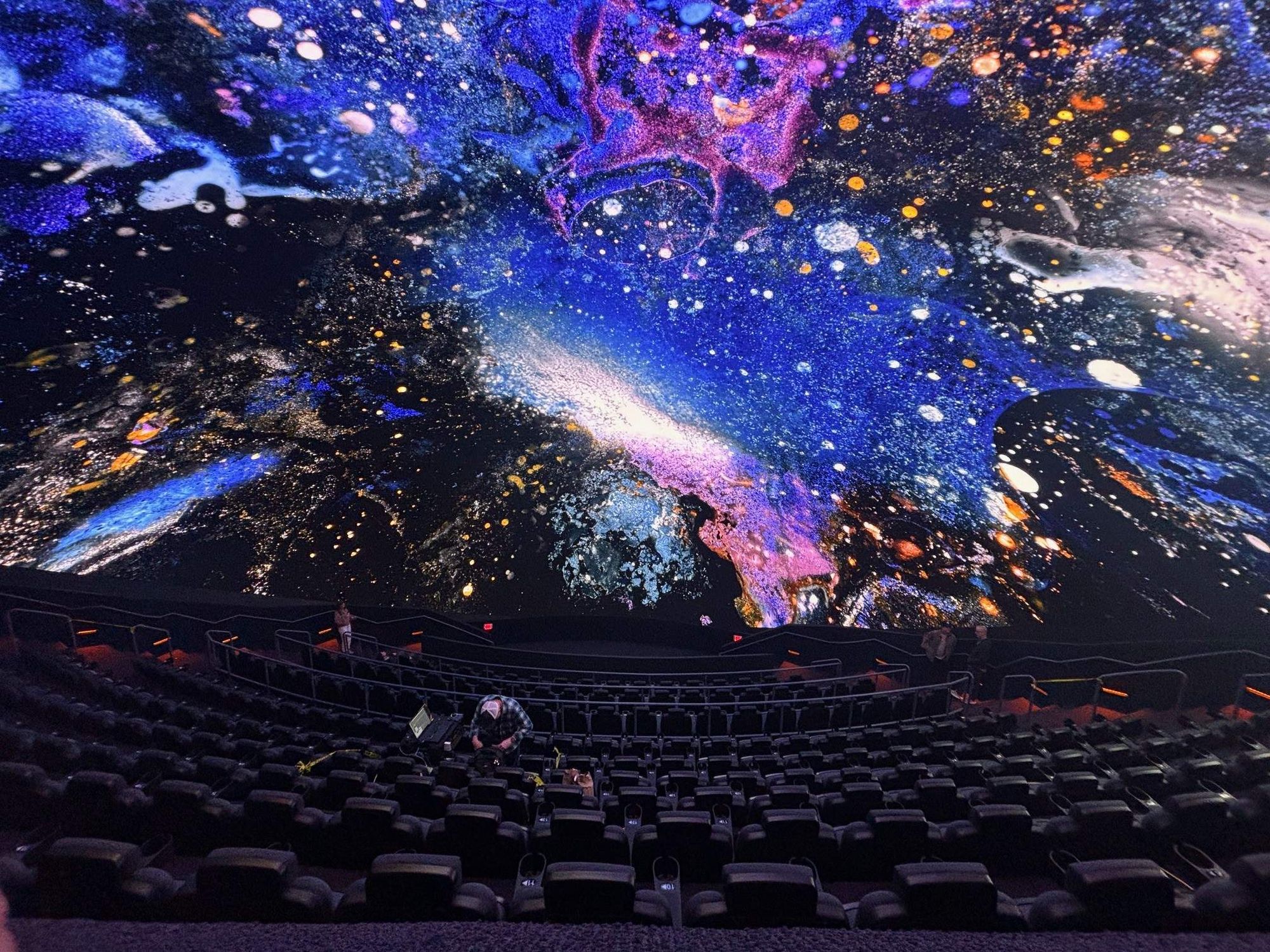
Definition
Set the Dome Coverage and Viewing Direction First
Clarify whether viewers look into a concave inner surface or at a convex exterior, and how much of the sphere the display covers. A shallow overhead cap, a hemispherical room and a larger dome have different support, access and content requirements. Define the rim plane, diameter, rise and audience positions before choosing the panel system.
A dome covers only part of a sphere. For a display surface that continues around the full 360-degree ball, see Ball Sphere LED Screen; for a half-sphere with a defined rim, compare Hemisphere LED Screen.
Engineering
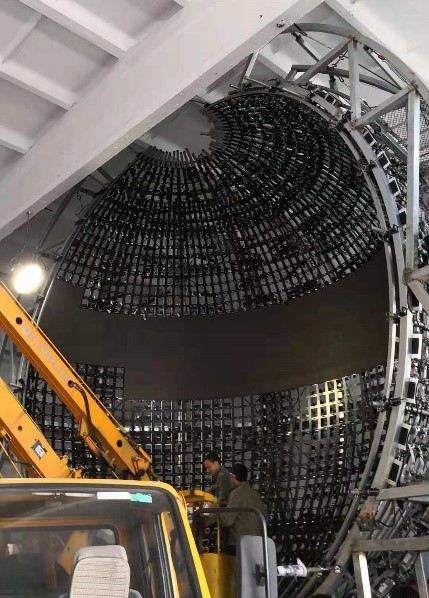
Engineering the Geometry of LED Dome Display
Dome diameter
Dimension the opening or base circle at the rim plane. State whether the value describes the inside clear diameter, outside structure or active LED surface.
Dome rise
Rise is the height from the rim plane to the dome crown. It distinguishes a shallow cap from a deeper immersive form and affects the audience’s view of the curved image.
Spherical radius
Record the intended profile or radius across the surface. A consistent geometric reference helps align panel rows and verify that the finished shape follows the design.
Coverage angle
Specify the angular coverage and where the display begins and ends. The rim and any transition to ceiling, wall or stage must be shown.
Ring/segment count
Show how the surface is divided into rings, meridians or cabinet segments. This layout guides support, assembly and the mapping coordinates.
Service cavity depth
Reserve depth behind the LED face for supports, cabling, ventilation and access. Confirm how technicians will reach components once the dome is enclosed.
Specification
Project Inputs for an LED Dome Display
| Shape-specific engineering parameter | Value | Engineering use |
|---|---|---|
| Rim diameter and reference plane | Project-defined / confirm by drawing | Establishes the opening size and how the dome meets its surrounding architecture. |
| Dome rise and profile | Project-defined / confirm by drawing | Defines the curvature depth and supports consistent panel and content mapping. |
| Coverage angle and viewing direction | Project-defined / confirm by drawing | Sets which area is active and how the dome relates to the audience. |
| Ring and segment layout | Project-defined / confirm by drawing | Coordinates panel boundaries, assembly sequence and map reference. |
| Active pixel boundary | Project-defined / confirm by drawing | Identifies the real illuminated area, rim margins and any service gaps. |
| Support depth and access route | Project-defined / confirm by drawing | Allows space for the frame, cable routing and planned maintenance. |
These are project inputs for quoting and engineering, not fixed Highcolor performance specifications. Confirm pitch, brightness, protection, module construction, electrical requirements and any venue-specific criteria against the selected platform and installation conditions.
Content & mapping
Map Content Across the Curved Dome Surface
The controller map must follow the dome’s actual pixel layout and curvature. Define coordinates by ring and segment, mark the rim and any inactive regions, and identify the reference point that ties the map to the installed surface.
Prepare a dome-specific content preview rather than assuming a flat 16:9 frame will appear correct overhead. Test horizon placement, text orientation and image distortion from the audience’s seated or standing positions, then validate seams with a calibration pattern.
Installation decision
Coordinate the Dome Frame, Rim and Service Access
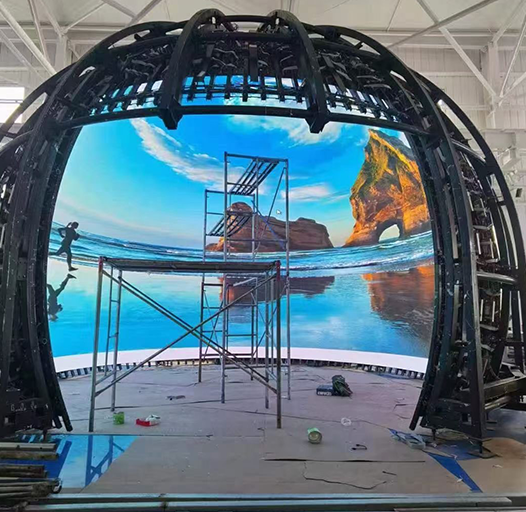
The support structure must hold the specified curvature and rim alignment without relying on LED panels to correct the frame. Coordinate ring supports, radial members, segment joints, lifting sequence and cable paths with the venue team. Protect the service cavity and decide whether modules are reached from the display face, behind the dome or through planned access panels.
For a complete spherical display, compare Ball Sphere LED Screen; for a hemispherical surface with a fixed rim, see Hemisphere LED Screen.
Cost drivers
What Determines the Cost of an LED Dome Display Project?
Dome cost depends on the active surface area and curvature, but also on coverage angle, segment layout, support structure, access provisions and the amount of calibration needed across the curved field. Venue coordination and the installation sequence can be significant. A section drawing and surface map are needed to define the scope.
Diameter And Rise
Diameter and rise establish the overall surface envelope. Greater depth or broader coverage can change panel quantity, support and installation requirements.
Segment Geometry
Ring widths, radial divisions and transitions at the rim determine how the curved field is assembled and where seams appear.
Support Ring Structure
The frame must support the curved surface and carry it into the venue. Structural interfaces and access provisions are part of the project scope.
Calibration Across The Curved Field
Calibration must account for the dome coordinates, seams and audience viewing positions. Content tests and alignment time should be included in commissioning.
Drawing review
Review the Dome Drawings and Pixel Map Before Production
Release the dome for production only when the section drawing, support layout and controller map refer to the same geometry. Check how the rim closes, how each segment is located and what the audience will see from the planned viewing area.
Rim diameter and plane
Confirm the opening or base-circle dimension and identify the rim plane. Separate clear opening, active pixel boundary and outside structural diameter.
Dome rise and profile
Measure the crown height from the rim plane and confirm the intended surface profile. Compare the section drawing with the room, seating and overhead clearance.
Spherical radius
Check the radius or profile reference at the specified locations. Confirm that the proposed segment arrangement can achieve the curvature without forcing the panel system.
Coverage angle
Mark the active angular span and the transition at the rim. This determines what is visible and which surfaces belong in the display map.
Ring and segment count
Reconcile each ring or segment with the assembly drawing and controller coordinates. Confirm sequence, orientation and reference marks for installation.
Service cavity depth
Verify the space behind the LED surface for framing, cabling, ventilation and maintenance. Show access panels or a clear removal path before the surrounding structure is completed.
FAQ
LED Dome Display Engineering FAQ
What drawing is needed to quote LED Dome Display?
Send a dimensioned sketch, CAD model or elevation showing dome diameter, dome rise and the active LED area. A reference image alone is not enough for final engineering.
Which geometry dimension controls LED Dome Display most strongly?
Start with dome diameter and dome rise. The engineering team also needs spherical radius before module segmentation is frozen.
How should pixel mapping be prepared for LED Dome Display?
Map the real active surface rather than forcing a standard 16:9 canvas. The controller map should follow the approved geometry, seams and inactive zones of this concave/convex dome project.
What service-access issue is specific to LED Dome Display?
Access must be planned around service cavity depth. Components that become trapped behind the finished geometry should be identified before the support structure is released.
What usually changes the cost of LED Dome Display?
The largest geometry-related variables are diameter and rise, segment geometry, support ring structure and calibration across the curved field. LED pitch and total active area also affect the final quotation.
Internal selection links
Compare Shapes With Different Engineering Intent
An overhead led surface integrated with a ceiling or suspended structure, where load, service access and upward viewing geometry dominate the design.
A six-sided led surface or tiled honeycomb system controlled by side length, corner angles and cell-to-cell alignment.
A half-spherical led surface with a defined rim plane, projection depth and mounting interface.
Request an LED Dome Display Engineering Review
Share the dome section, rim diameter, rise, coverage angle, audience layout, active pixel map and service-access plan so the physical design and content geometry can be reviewed together.
Request Engineering Review →