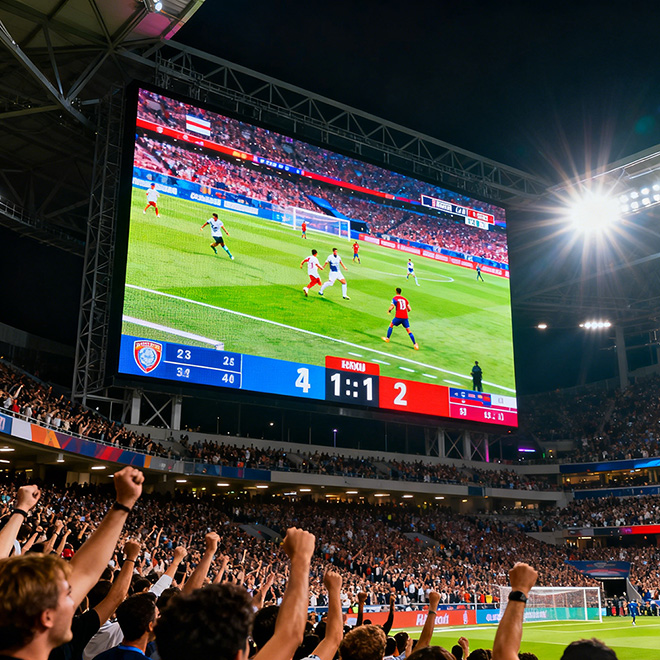
Commercial LED sphere display · viewing, mounting and content planning
LED Display Ball
An LED Display Ball turns a spherical surface into a visible focal point for visitors approaching from different directions. Start with where people will see it, how the sphere will be supported and what the content needs to communicate. The installation plan then determines active coverage, screen size, viewing distance, access and pixel mapping for malls, hotels, exhibitions and branded public spaces.
Send Drawing & Dimensions →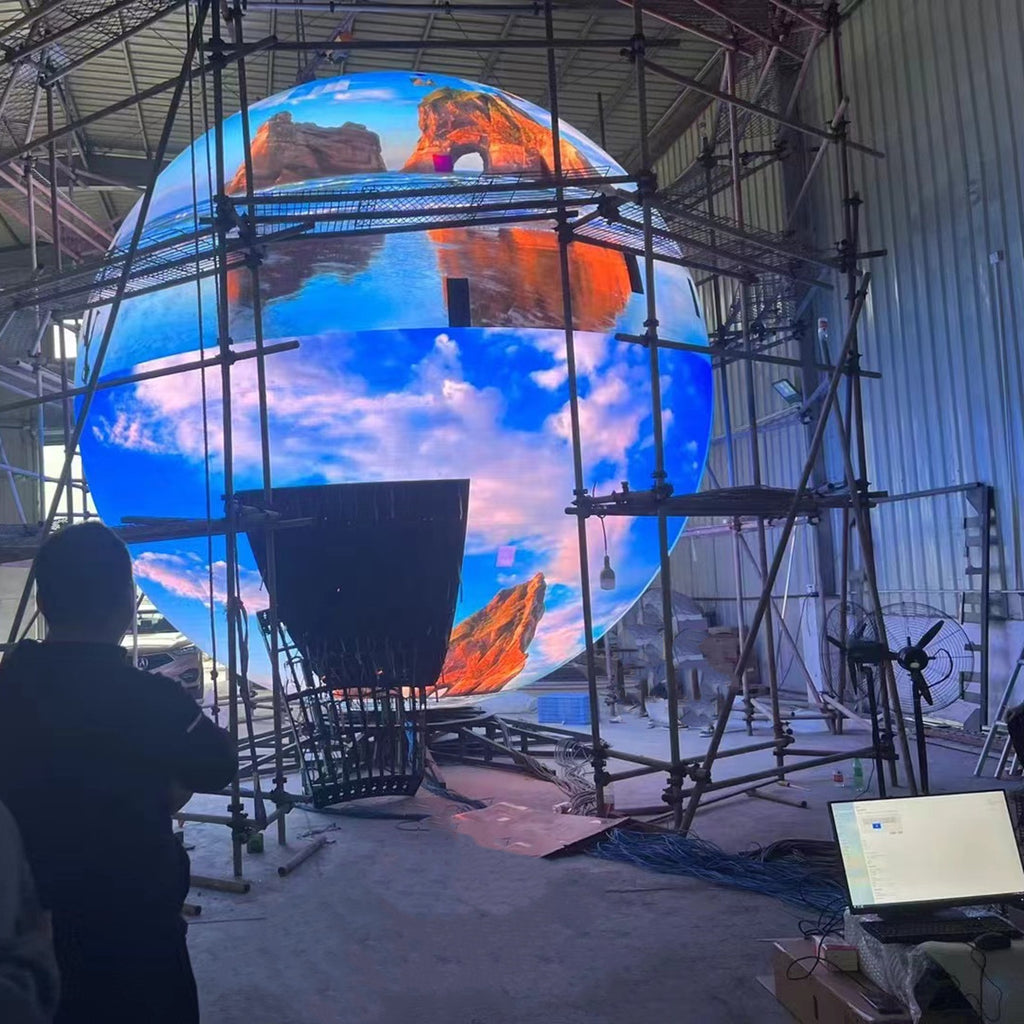
Definition
Choose the Display Format Around the Venue and Viewing Pattern
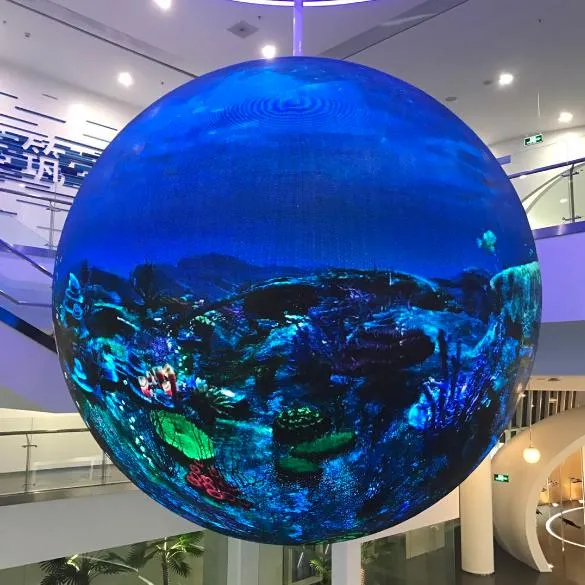
An LED display ball is a finished commercial feature, so selection begins with the venue rather than a module specification. Decide whether visitors circulate around the object or view it from a main approach, whether it stands on a base or hangs overhead, and whether the entire shell or only a defined zone carries pixels. Those decisions affect sightlines, support, safety clearances and content design.
For a full spherical LED object requiring detailed pole, segment and structural coordination, see Ball Sphere LED Screen. For a half-sphere ending at a rim, compare Hemisphere LED Screen.
Engineering
Engineering the Geometry of LED Display Ball
Finished ball diameter
Set the finished outside diameter and the usable LED area separately. The base, trim, access panel or structural core may extend beyond the visible screen.
Floor/suspended mounting
Select floor-standing, suspended or integrated mounting only after confirming the venue structure and audience approach. The support must leave the intended viewing zones clear.
Active surface coverage
Define whether the audience sees a full 360° surface or a limited front-facing area. This changes pixel quantity, visual continuity and the position of inactive zones.
Nearest viewing distance
Measure the closest regular audience position, not just the average distance. Use it with content detail and the chosen LED pitch during product selection.
Access hatch position
If an access hatch is required, locate it away from primary viewing positions where practical and show how it opens or how the internal parts are removed.
Overall installed height
Record the overall height including base, suspension and clearance. For overhead installations, coordinate the lowest point with circulation and venue safety requirements.
Specification
Drawing Inputs Required for Commercial Spherical Product Selection
| Shape-specific engineering parameter | Value | Engineering use |
|---|---|---|
| Finished diameter and visible screen area | Set from venue layout and viewing plan | Defines the object scale while keeping frame, base and non-display areas distinct from the active LED surface. |
| Mounting format and host interface | Floor base, suspension or integrated support; confirm by design | Determines how the sphere is held, installed and coordinated with the venue structure. |
| Active coverage and viewing directions | Full 360° or project-defined viewing zones | Identifies which areas need pixels and where visual transitions or inactive zones occur. |
| Nearest and typical viewing distances | Measure from expected audience positions | Supports an appropriate pitch and content-detail discussion for the intended viewing experience. |
| Service hatch or replacement route | Project-specific; show opening or removable sections | Keeps internal components serviceable after decorative finishes and venue equipment are installed. |
| Overall installed height and clearance | Dimension from finished floor or suspension datum | Checks sightlines, ceiling coordination and safe clearance in public circulation areas. |
These are project selection and coordination inputs, not fixed Highcolor product ratings. Confirm pitch, brightness, protection, weight, control system and mounting details for the chosen product and venue.
Content & mapping
Plan Content for People Moving Around the Sphere
Agree a front reference and viewing directions before content production. For a 360° display, map seams, top and bottom boundaries, any inactive base area and the orientation of key messages so the presentation remains intentional as visitors move around it.
Use short visual loops, large shapes and clear brand elements where the audience is constantly changing position. Review test content at the closest and most common viewing points; do not judge legibility from a flat artwork preview alone.
Installation decision
Coordinate the Mount, Venue Structure and Service Route
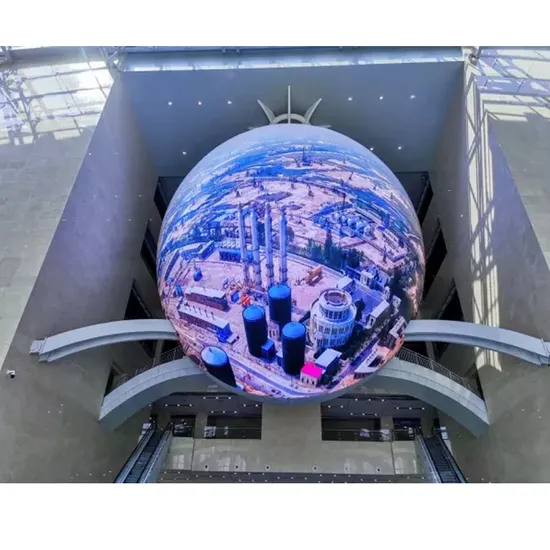
A stable base or suspension system must support the selected sphere without blocking its intended viewing zones. Confirm connection points, load transfer, lifting and installation sequence with the venue team, then coordinate power, data, ventilation and cable concealment with surrounding finishes.
Plan access before the sphere is enclosed or placed above an occupied area. Identify removable panels, service hatch location or the method for lowering the display, and keep the required route usable after the venue fit-out is complete.
Cost drivers
What Affects the Cost of an LED Display Ball?
The budget is shaped by the sphere size and active coverage, the selected LED platform and the mounting work needed at the venue. Content mapping, lifting, access and commissioning should be scoped alongside hardware so the quotation reflects the complete installation.
Diameter, Coverage & LED Pitch
These set the active panel quantity and the level of image detail expected at the planned viewing distance.
Base or Suspension Design
A floor base, integrated plinth or overhead support changes fabrication, structural coordination and installation work.
Venue Access & Installation Height
Delivery route, lifting equipment, work windows and public-area controls affect site logistics and labor.
Control, Content Mapping & Service
Spherical mapping, commissioning, removable sections and long-term maintenance access add project-specific scope.
Drawing review
Review Venue Sightlines, Mounting and Service Details Before Production
The final review should connect the product choice to the real venue. Check the display envelope against plans and sections, verify the support interface, confirm audience positions and make sure content, power, data and service access are coordinated before the sphere is built.
Finished size and screen boundary
Show the outside diameter, the active LED area and any base, trim or non-display section as separate dimensions. Confirm the measurements against the intended venue position and the approved product drawing.
Mounting and structural interface
Identify whether the sphere stands on a base or hangs from the host structure. Resolve connection points, load path, lifting sequence and required clearances with the project team before fabrication.
Audience positions and active coverage
Mark the main approach, closest viewing position and the areas where visitors can walk around the object. Match the active screen coverage and content orientation to these real sightlines.
Viewing distance and content detail
Use measured audience distances to discuss pixel pitch and the level of detail expected in text, graphics and motion. Check a representative test pattern at both near and typical viewing positions.
Service and replacement access
Document how technicians will reach power and control components and how a damaged module can be removed. Keep openings or removable sections compatible with the finished display and nearby architecture.
Delivery route and installed clearance
Check doors, lifts, rigging points and the final clearance envelope before shipment. This helps confirm whether the sphere can arrive assembled or needs planned on-site assembly.
FAQ
LED Display Ball Selection FAQ
What should I decide before choosing an LED Display Ball?
Start with the venue plan, audience approach, target viewing zones, mounting preference and the message the display needs to carry. These determine the finished size, active screen area and content map.
Can an LED Display Ball be floor-standing or suspended?
Both formats can be considered, but the host structure and installation plan determine what is suitable. Confirm the load path, connection points, lifting route and required clearance with the venue team before finalizing the mounting design.
Will content be visible from every side?
Only the active LED area displays content. Specify whether the project needs full 360° viewing or defined viewing zones, and identify any base, access panel or inactive area so content orientation matches the physical product.
How do I select pixel pitch for a spherical display?
Use the nearest regular viewing distance together with the content detail and ambient conditions. Confirm the available pitch options for the selected product platform rather than inferring a fixed specification from the sphere shape alone.
What affects the installed cost?
Key variables include sphere diameter, active coverage, LED pitch, mounting or suspension work, venue access, content mapping and commissioning. Include delivery constraints and service access in the scope so the quotation covers the full installation.
Internal selection links
Compare Shapes With Different Engineering Intent
A 360-degree spherical led object where latitude-like segmentation and pole treatment determine surface continuity.
A half-spherical led surface with a defined rim plane, projection depth and mounting interface.
A filled circular led image surface defined by diameter and edge segmentation rather than a rectangular canvas.
Plan an LED Display Ball for Your Venue
Share the venue plan, audience positions, target viewing zones, mounting preference, screen diameter, content concept and delivery constraints for a practical product-selection review.
Request Engineering Review →