wrap existing round/curved column · project engineering
Column LED Screen
Column LED Screen is designed as an LED surface wrapped around an existing column, commonly using a cylindrical or multi-segment curve tied to the host column geometry. It is most relevant to malls, airports, lobbies, casinos and exhibition halls.
Send Drawing & Dimensions →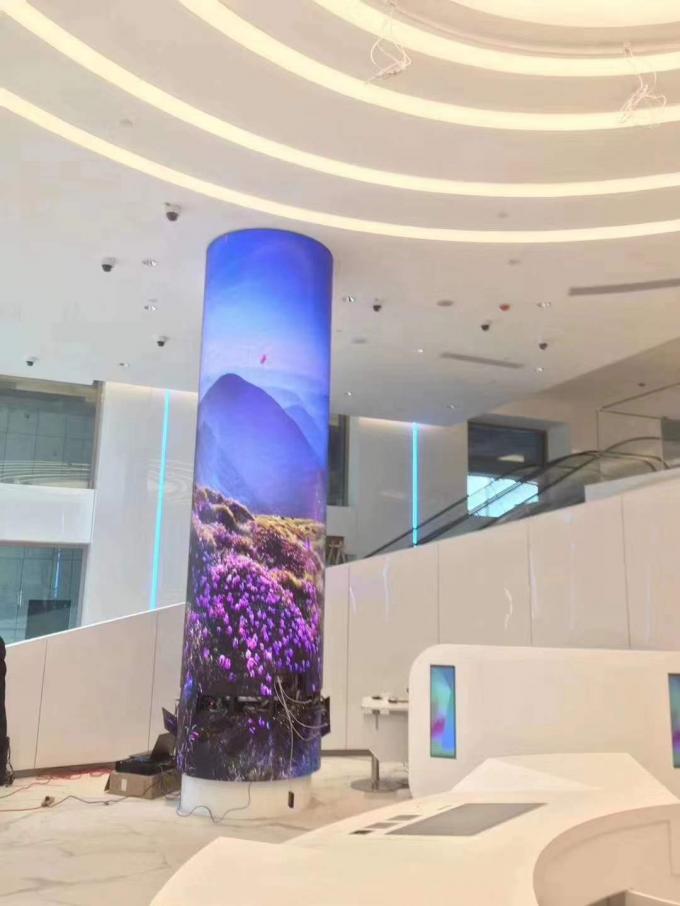
Definition
Measure the host column before choosing the display
A retrofit wraps an LED surface around an existing structural column. Before selecting modules or support hardware, establish the host column’s actual shape, finished dimensions, obstructions and mounting conditions. Those measurements determine the segmentation, service clearances and pixel map.
For a new freestanding digital object rather than a wrap over an existing column, use LED Pillar.
Engineering
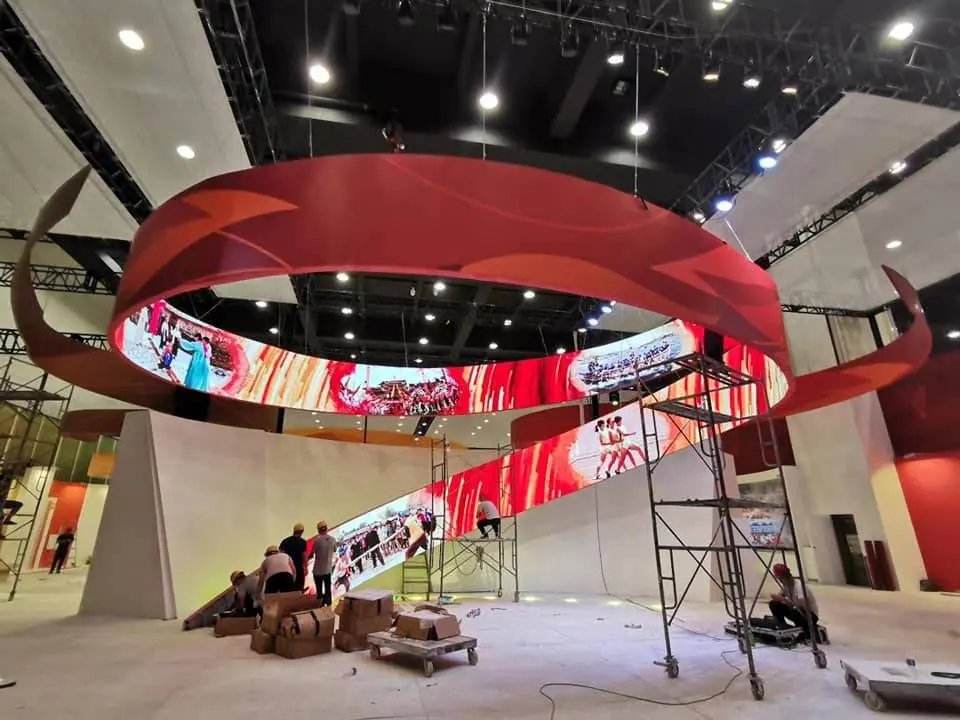
Engineering the Geometry of Column LED Screen
Existing column diameter/perimeter
This dimension establishes the primary geometric envelope and should be fixed on the approved drawing.
Active wrap height
This controls how the active LED surface is divided, supported or viewed in the finished installation.
Wrap coverage angle
This value affects segmentation and should be coordinated with the intended viewer or host structure.
Minimum module radius
Record this explicitly so production does not infer the geometry from a concept rendering.
Vertical seam position
This parameter helps define repeatable assembly references, alignment and the real pixel canvas.
Service gap to host column
Maintenance must remain possible after the decorative structure and LED surface are fully installed.
Specification
Drawing Inputs Required for Wrap Existing Round/Curved Column
| Shape-specific engineering parameter | Value | Engineering use |
|---|---|---|
| Existing column diameter/perimeter | Project-defined / confirm by drawing | Required to engineer the wrap existing round/curved column geometry before production. |
| Active wrap height | Project-defined / confirm by drawing | Required to engineer the wrap existing round/curved column geometry before production. |
| Wrap coverage angle | Project-defined / confirm by drawing | Required to engineer the wrap existing round/curved column geometry before production. |
| Minimum module radius | Project-defined / confirm by drawing | Required to engineer the wrap existing round/curved column geometry before production. |
| Vertical seam position | Project-defined / confirm by drawing | Required to engineer the wrap existing round/curved column geometry before production. |
| Service gap to host column | Project-defined / confirm by drawing | Required to engineer the wrap existing round/curved column geometry before production. |
These are RFQ/engineering fields, not claimed Highcolor performance specifications. Exact dimensions, pitch, brightness, protection and module construction must be confirmed for the selected product platform.
Content & mapping
Map the active pixel canvas to the real surface
Content must follow the approved active geometry. Mark seams, corners, caps, cutouts and inactive zones in the controller map before media is produced.
For an existing round or curved column, do not assume a rectangular 16:9 video can be stretched across the display without distortion. Define the visible canvas and seam location first, then prepare content for that map.
Installation decision
Choose Structure and Service Access for Service gap to host column
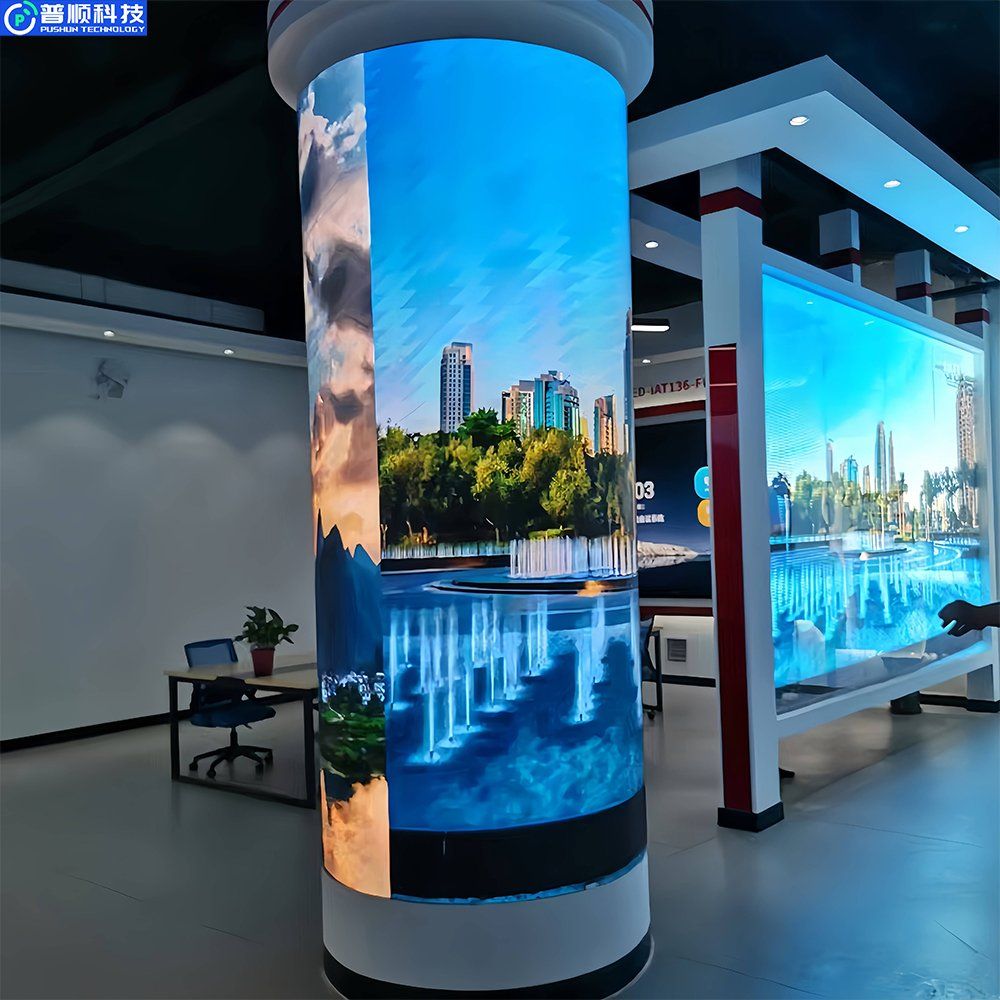
The support design should hold the intended geometry without forcing LED modules to correct structural errors. Establish datums, segment joints, installation sequence and service clearances from the project drawing.
For a new freestanding digital object rather than a wrap over an existing column, use LED Pillar.
Cost drivers
What drives the cost of a column LED screen?
The estimate depends on the measured host geometry and the work needed to fit, support, power and service the display. A useful quote ties each allowance to a drawing revision and a defined LED platform.
Column Circumference
Changes fabrication and segmentation effort for this shape.
Required Bend Radius
Changes the amount or density of hardware required.
Host-Column Tolerance
Changes structural, tooling or installation work.
Service Gap And Trim
Changes commissioning, mapping or finishing effort.
Drawing review
Review the drawing before production
Use the drawing review to make mechanical, display and content teams agree on the same geometry. Confirm each controlling dimension and viewing position on the approved revision before fabrication starts.
Existing column diameter/perimeter
Existing column diameter/perimeter controls the wrap length, segmentation count and geometric closure of Column LED Screen. It should be measured from the finished host or approved fabrication drawing, not estimated from a rendering. A site measurement and fabrication drawing should resolve any conflict before manufacturing.
Active wrap height
Active wrap height is a controlling envelope dimension for Column LED Screen. Use the installed finished dimension and identify any trim, structural clearance or non-LED border separately so the active pixel area is not confused with the overall object size. This is one of the dimensions that should appear in the RFQ rather than being left to supplier interpretation.
Wrap coverage angle
Wrap coverage angle fixes the relationship between adjacent surfaces. Record the design angle on the fabrication drawing so corner hardware, seam alignment and pixel mapping are based on the same datum. Changing it late can affect several downstream parts, so revision control matters.
Minimum module radius
Minimum module radius determines how the LED surface changes direction. Engineering should verify that the chosen module strategy can follow this geometry without forcing the PCB, cabinet or support frame outside its intended mechanical range. For replacement or retrofit work, measure the existing condition instead of relying only on legacy drawings.
Vertical seam position
Vertical seam position governs the visual transition between surfaces. Review it from the priority viewing positions because a mechanically acceptable joint can still create a visible interruption in continuous media. The approved value should be shared by mechanical, control and content teams.
Service gap to host column
Service gap to host column defines how technicians reach receiving cards, power supplies, modules and internal connections after installation. The access route must remain usable after decorative cladding and adjacent construction are complete. Tolerance should be agreed where neighboring architecture or decorative finishes are already fixed.
FAQ
Column LED Screen Engineering FAQ
What drawing is needed to quote Column LED Screen?
Send a dimensioned sketch, CAD model or elevation showing existing column diameter/perimeter, active wrap height and the active LED area. A reference image alone is not enough for final engineering.
Which geometry dimension controls Column LED Screen most strongly?
Start with existing column diameter/perimeter and active wrap height. The engineering team also needs wrap coverage angle before module segmentation is frozen.
How should pixel mapping be prepared for Column LED Screen?
Map the real active surface rather than forcing a standard 16:9 canvas. The controller map should follow the approved geometry, seams and inactive zones of this wrap existing round/curved column project.
What service-access issue is specific to Column LED Screen?
Access must be planned around service gap to host column. Components that become trapped behind the finished geometry should be identified before the support structure is released.
What usually changes the cost of Column LED Screen?
The largest geometry-related variables are column circumference, required bend radius, host-column tolerance and service gap and trim. LED pitch and total active area also affect the final quotation.
Internal selection links
Compare Shapes With Different Engineering Intent
A vertical led pillar designed as a self-contained architectural object with emphasis on footprint, height and all-around presentation.
A four-sided led wrap around a square or rectangular column with four planar faces and controlled vertical corners.
A cylindrical led object with branded can-like proportions and controlled top/bottom finishing.
Plan a column LED screen around your site
Share the measured column profile, active height, desired coverage, viewing distance, installation environment and service-access constraints. The engineering review can identify open dimensions before a quotation is finalized.
Request Engineering Review →