OFF-GRID ROADWAY INFORMATION
Solar Traffic Sign
Assess whether solar power can reliably support the sign, controls and communications through the site's lowest-sun periods and required operating schedule.
Explore Transportation Solutions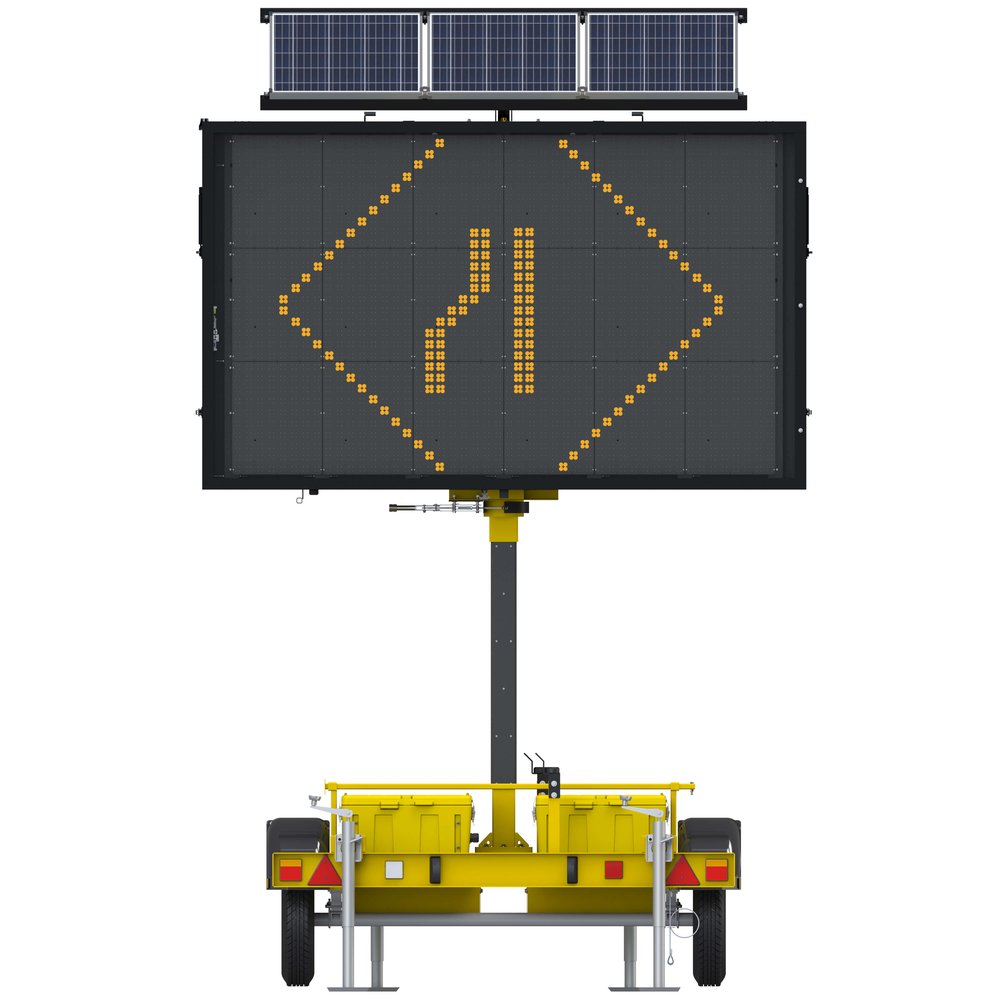
Design for usable energy through the full operating cycle
A solar traffic sign couples the display, controller, sensors and communications to a site power system. Size it for seasonal solar exposure, night operation, low-sun periods and required availability; do not assume panel output alone guarantees continuous service.
Is solar power a good fit for this traffic sign?
Off-grid power is most useful where grid access is difficult or costly, but suitability depends on the sign's criticality and local energy conditions. Compare the complete lifecycle and reliability needs before deciding between solar, grid or a hybrid design.
Load & duty cycle
Record message brightness, operating hours, average duty cycle, controller consumption, communications and any sensors. Include standby and cold or hot weather effects if relevant to the selected battery.
Solar access by season
Assess shading, orientation, panel area and local seasonal sunlight at the actual installation location. Model low-sun periods rather than relying only on annual averages.
Availability requirement
Specify how long the sign must operate without adequate solar input and which messages are essential. The required reserve and fallback behavior depend on the operational risk of losing the display.
Whole-life cost & service
Compare installation, battery replacement, panel cleaning, remote monitoring and roadside service needs with a grid-connected option. Include access, traffic control and replacement logistics.
Build an energy budget before choosing hardware
Estimate energy use for the display at each brightness and duty-cycle setting, then add the controller, communications, sensors and standby load. Compare the total with site-specific solar yield and battery reserve across the intended season and required autonomy period.
01
Model the lowest-sun season, shading and panel orientation.
02
Include every connected device, standby load and communication interval.
03
Set operating hours, dimming, message duty cycle and any sleep mode.
Survey solar access and roadside constraints
The best sign position for drivers may not be the best location for a solar panel. Survey both the communication sightline and the panel's seasonal exposure, then coordinate structure, battery protection, cable routes and safe service access.
Primary check
Check shade, orientation and solar access across seasons.
System checks
Confirm structure, wind loading, battery enclosure and public access protections with the site team.
Define what happens when stored energy runs low
Agree a predictable response with the road authority before installation. A low-battery condition, missed update or communications fault must not leave drivers relying on a stale instruction. Define operator alerts, approved fallback content and the conditions for returning to normal operation.
Separate essential safety or traffic content from optional messages.
Set monitoring and escalation thresholds for charge, load and faults.
Test low-energy behavior, extended cloudy periods and full recovery.
Plan maintenance for the panel, battery and sign
Solar equipment adds components and service intervals to the sign lifecycle. Confirm who inspects and cleans panels, checks batteries and enclosures, reads diagnostics and arranges replacement without unsafe access or unexpected downtime.
01
Set battery inspection and replacement responsibility.
02
Define remote monitoring needs, fault alerts and record keeping.
03
Plan seasonal checks and safe roadside access.
What to include in a solar traffic sign proposal
Give suppliers the site and duty-cycle information needed to explain their energy assumptions. Compare proposals on delivered availability, failure behavior and service scope, not panel or battery size alone.
Site & sign mission
Share sign type, location, approach speed, viewing position, message content, dimensions, installation drawings, shade survey and authority requirements.
Energy & resilience
Request load assumptions, seasonal production model, battery reserve/autonomy, operating profile, low-energy behavior, monitoring and recovery conditions.
Installation & lifecycle
Clarify structure, foundations, cabling, enclosure, commissioning, maintenance access, battery replacement, panel cleaning, spare parts and service responsibility.
Solar traffic sign FAQs
Will a solar traffic sign work everywhere?
No. It depends on the sign's energy demand, solar exposure, battery reserve, seasonal conditions and required availability. A site assessment and operating-load model are needed before confirming suitability.
Can it run at full brightness all night?
Only if the energy model supports that duty cycle through the required low-sun period. Full brightness increases load, so operating profile, panel capacity, battery reserve and dimming controls must be assessed together.
How do I estimate solar panel and battery size?
Start with the sign, controller, communications and sensor loads over the planned schedule. Use local seasonal solar conditions and the required autonomy period to model energy generation and storage; have the final design checked against the site and operational requirements.
Will a solar LED sign work after several cloudy days?
That depends on the energy reserve, load and low-sun design assumptions. Ask for the modeled autonomy and define operator alerts and an approved low-energy fallback for the actual sign mission.
Can solar power run a full-color variable message sign?
It may be possible for some designs, but a full-color display can have a materially different load from a low-duty or limited-message sign. Confirm the display's average and peak consumption using representative content and brightness settings.
When should I choose grid power instead?
Compare grid availability and connection cost with the sign's energy demand, criticality, solar access, required autonomy and lifecycle service. A hybrid approach may also be evaluated where project conditions warrant it.
What needs maintenance on a solar traffic sign?
The service plan can include panel condition and cleaning, battery health, enclosure sealing, cabling, mounting, diagnostics and roadside access. The exact schedule depends on the equipment and site conditions.
Assess a solar traffic sign for your site
Share the sign's purpose, location, operating schedule, message examples, seasonal exposure and required availability. Highcolor can help define the display and off-grid system scope.
Contact Highcolor