LED Grid Screen for Architectural Displays
Turn a large building surface into a recognizable media feature with a repeating open grid. Plan the display around façade geometry, viewing distance and service access so the visual effect and the building can work together.
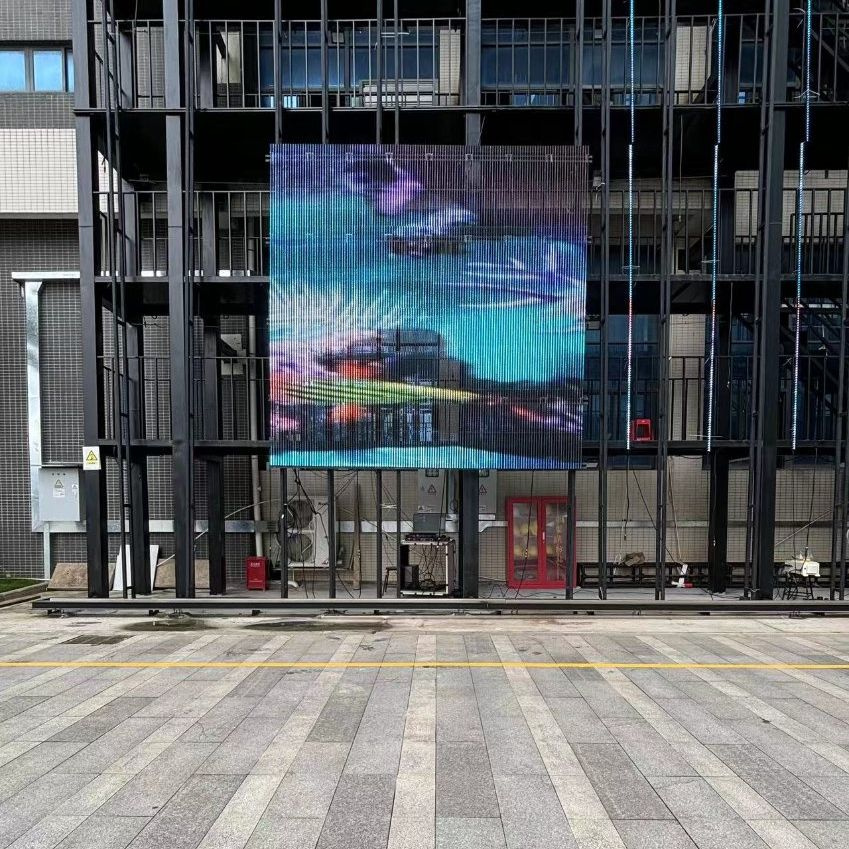
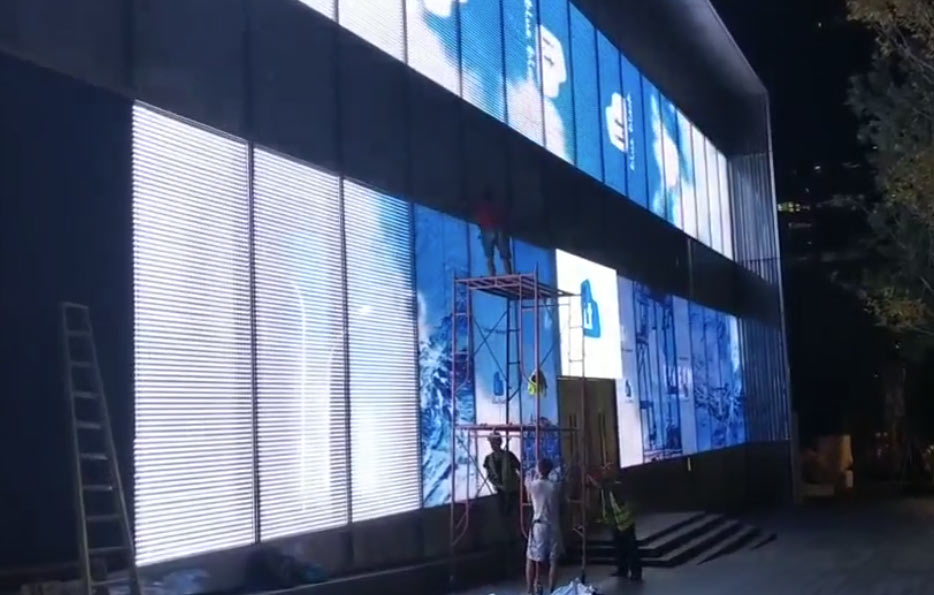
Start with the architecture and viewing routes
Decisions that shape the grid screen
Viewing distance and image scale
List the normal viewing positions and the smallest content that must remain readable. Test representative artwork at a realistic scale: fine lettering, thin lines and detailed photos can lose definition when mapped to an open grid or viewed from far away.
Grid rhythm and façade alignment
Coordinate the grid pitch and orientation with architectural joints, windows and structural bays. Decide how the pattern should terminate at corners and edges, and whether gaps or opaque areas affect the intended visual. A mock-up helps stakeholders assess the pattern before detailed content production.
Power, data and service zones
Plan the route and segmentation of power and data, controller locations, cable protection and access for inspection. Coordinate these with the façade and electrical teams, and document what can be isolated or replaced without interrupting the whole display.
Map the power and signal network
Draw the grid as a set of identifiable sections, with controller outputs, data routes, power feeds and isolation points shown on the plan. Confirm maximum cable distances and environmental protection with the selected system supplier and the project electrician. Label both ends of each connection and retain an as-built map for commissioning and future service. Agree how the display behaves after a signal or power fault and who is responsible for restoring the correct mapping.
Design maintenance into the installation
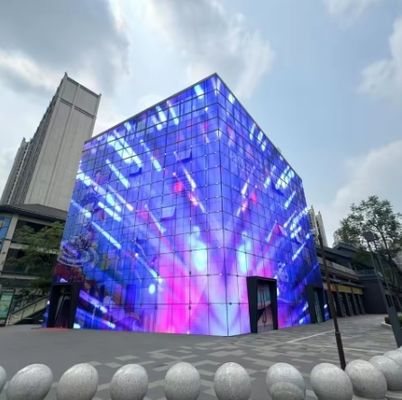
Agree on safe access and isolation procedures before installation. Document replaceable sections, power and data connections, spare modules, cleaning method and who responds to faults. For large or elevated screens, plan how technicians reach the rear and how building access will be coordinated. A service plan that is practical for the site helps reduce disruption when a section needs attention.
LED grid screen FAQs
What is an LED grid screen?
An LED grid screen is a display arranged as a repeating lattice or open pattern rather than a continuous solid surface. Depending on the design, it can add video or graphic content to a façade while allowing some light and views through the display.
How is an LED grid screen different from a regular LED wall?
A conventional LED wall presents a more continuous image area. An open grid makes the spacing and structure part of the appearance, which can affect detail, contrast and visibility through the screen. The choice depends on the architecture, viewing distance and content requirements.
What should be checked before installation?
Review the façade and support structure, wind exposure, attachment details, power and data routing, weather protection, maintenance access and applicable building requirements. Coordinate these items with the building owner, façade contractor and qualified engineers.
Can detailed text and photos be shown on a grid screen?
They may be shown, but fine details can be harder to read depending on the grid spacing, content mapping and viewing distance. Test actual artwork at realistic scale and prioritize simple shapes and legible typography where the audience needs to read information.
Scope an LED grid screen for your site
Share the façade drawings, intended viewing distances, operating environment, content goals and maintenance constraints. Highcolor can help assess the layout and outline the information needed for a project proposal.
Contact Highcolor