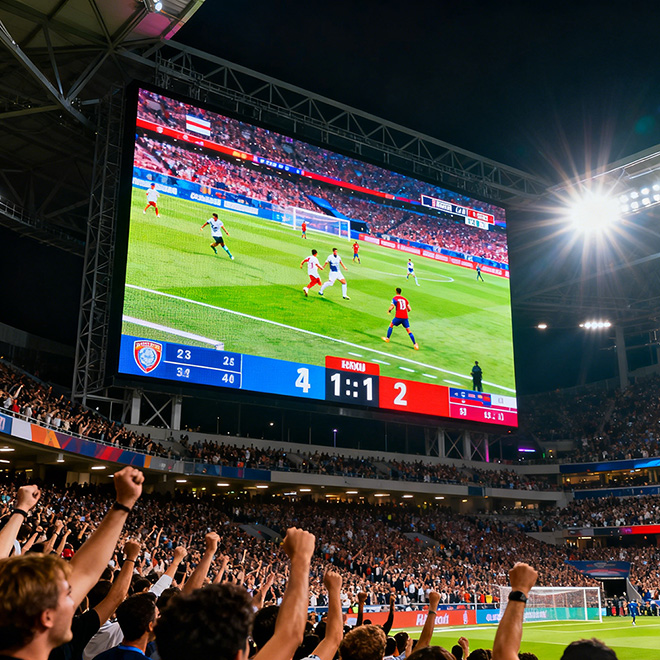
Grille LED Display for Open Facades
Bring animated content to building exteriors while preserving a sense of openness. A successful grille display starts with the façade, sightlines, wind exposure and service access—not just the screen dimensions.
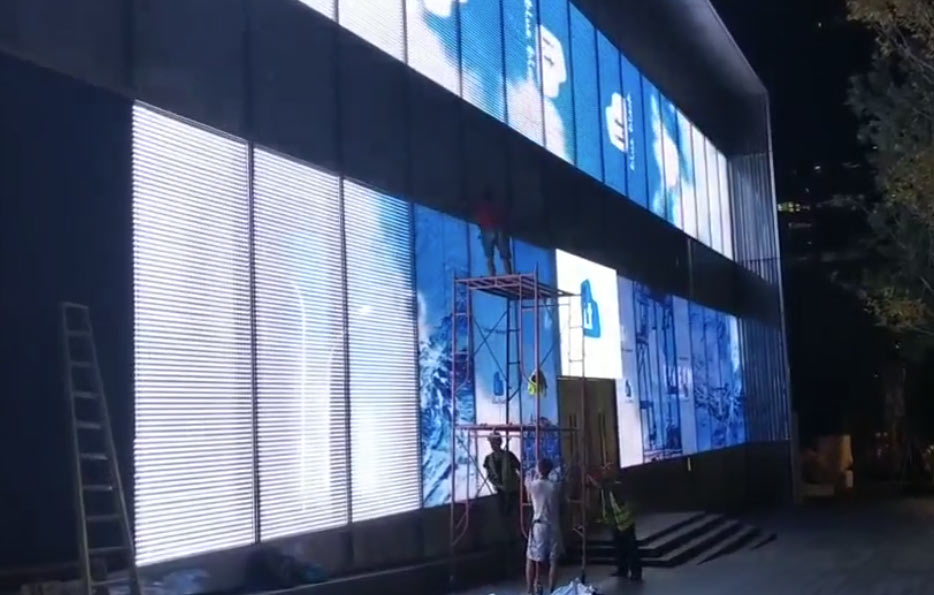
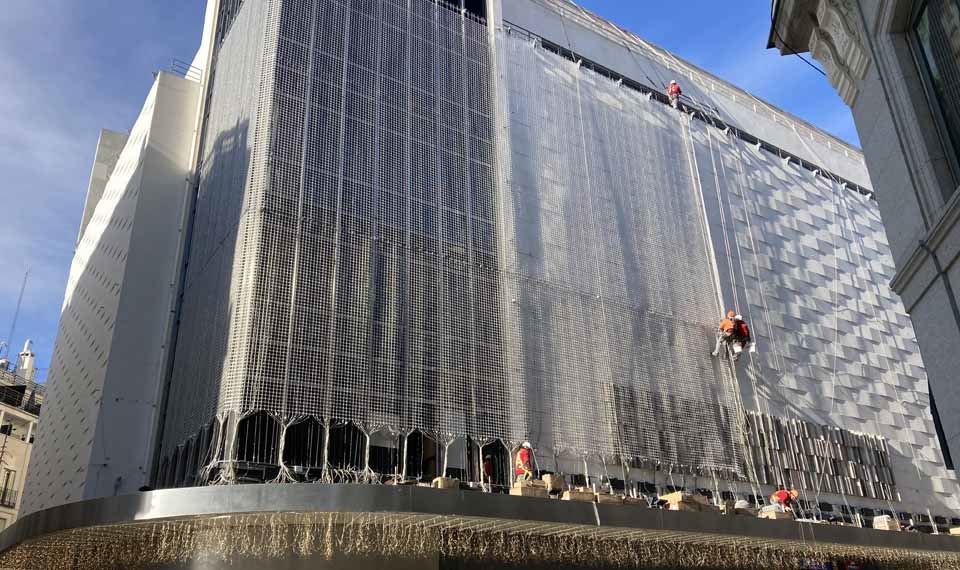
Start with the façade and structural spans
Key decisions before specifying a system
Match the display to the viewing distance
Estimate typical near and far viewing points. Pixel spacing and open area affect apparent detail, image continuity and how much of the building remains visible. Review a sample layout on the actual façade before signing off.
Treat wind and support as design inputs
The support structure, attachment method and building exposure affect the engineering scope. Have the project engineer validate the loads and fixing strategy against local requirements; avoid selecting by screen area alone.
Plan for service from day one
Define how technicians reach power and data connections, replace sections, isolate circuits and work safely at height. Include access windows and responsibility for building-side infrastructure in the maintenance plan.
Design media for the building, not just the screen
Agree on the main viewing routes and the role of the display: landmark content, event messaging or scheduled advertising. Test image scale, contrast and motion against the façade’s lines and nearby light sources. Create a mapped canvas that respects joints and openings, then preview representative content from street level and interior viewpoints. Define who supplies media, who approves it and how updates are scheduled so the display remains coherent after handover.
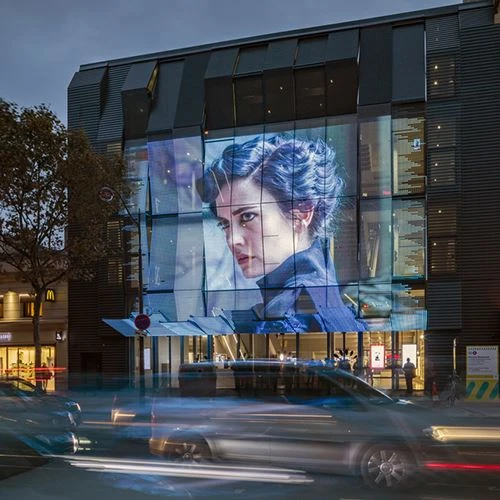
Commission for day and night conditions
Review content legibility, reflections and brightness from the intended viewing points in daylight and after dark. Check how the display interacts with interior lighting and nearby residences, and agree on operating schedules and brightness limits with the site team. Test sample content at scale before completing the full media plan.
Grille LED display FAQs
What is a grille LED display?
A grille LED display uses separated LED bars or modules to form an open display surface. The structure allows more air and light through than a solid cabinet wall, while displaying video or graphics across a building or other large span. Actual openness, viewing quality and suitability depend on the specific system and installation.
When should a project consider a grille display?
It may be considered for building façades or large exterior spans where visual openness, reduced visual mass or airflow are important project factors. Compare it with transparent film, mesh, conventional LED cabinets and architectural lighting based on the building design, viewing distance, content and engineering constraints.
What information is needed for a preliminary layout?
Useful inputs include façade drawings, span dimensions, mullion and support locations, intended viewing areas, daylight conditions, wind exposure, access routes and the desired operating schedule. Final structural and code requirements should be reviewed by qualified project professionals.
How should the display be maintained?
Plan safe access, isolation of power and data, replacement of individual sections, inspection intervals and responsibility for façade-side infrastructure. The maintenance approach depends on mounting position and system design, so agree it with the installer and building operator before commissioning.
Scope a grille display for your building
Share façade drawings, dimensions, viewing distances, local wind criteria and maintenance access requirements. These details help the team assess the display layout and installation approach.
Contact Highcolor