LED Display Viewing Angle: The Complete Guide
A wider viewing angle helps maintain brightness, contrast, and color consistency for viewers sitting away from the center of the screen.
For LED display projects such as retail stores, stadiums, control rooms, digital signage, and outdoor advertising, choosing the correct viewing angle ensures better visibility and a more consistent visual experience.
In this guide, Highcolor explains what LED display viewing angle means, how it is measured, what factors affect it, and how to select the right viewing angle for different applications.
What Is LED Display Viewing Angle?
LED display viewing angle refers to the maximum angle from the front center of the screen where the displayed image remains acceptable in brightness, contrast, and color performance.
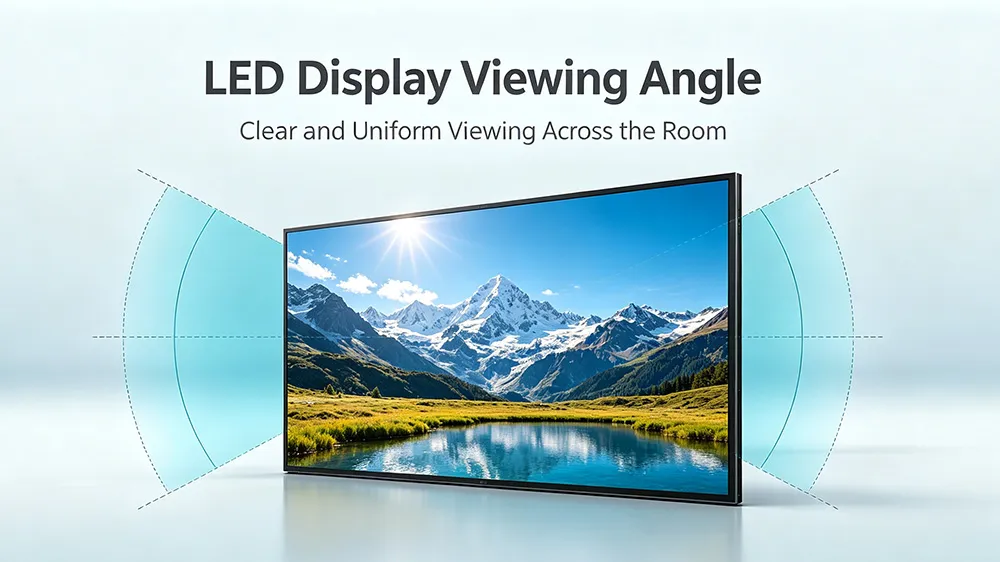
The viewing angle is normally expressed in two directions:
- Horizontal viewing angle: The visible range from the left and right sides of the display.
- Vertical viewing angle: The visible range from above and below the display.
For example, an LED screen specification of 140° (H) × 120° (V) means viewers can move approximately 70° horizontally and 60° vertically from the center position while maintaining acceptable image quality.
However, viewing angle is not only a number on a datasheet. The actual viewing experience is affected by LED package design, optical structure, brightness level, installation position, and viewing environment.
Why Is Viewing Angle Important for LED Displays?
A narrow viewing angle can cause several problems for off-center viewers:
- Lower brightness when viewed from the side
- Color deviation compared with the center viewing position
- Reduced contrast and image clarity
- Uneven visual experience across the audience area
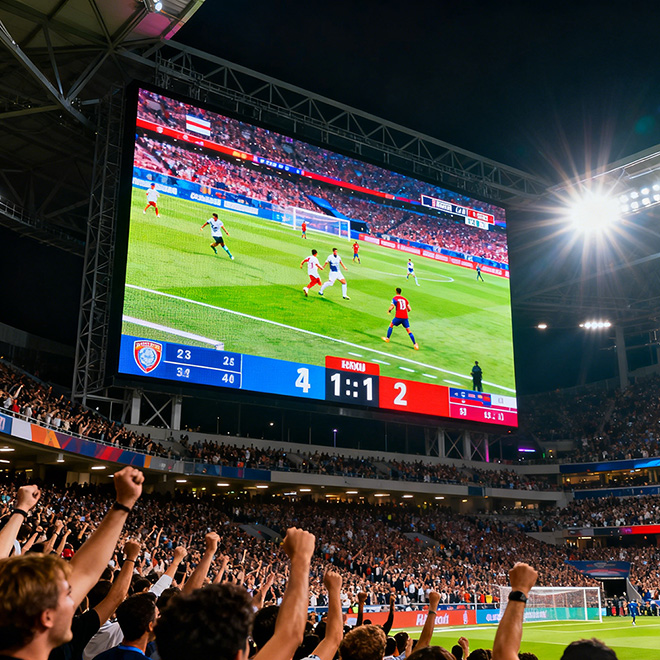
For commercial LED displays, audiences are rarely positioned directly in front of the screen. Customers walking through a shopping mall, fans watching a stadium display, or passengers viewing an airport screen may see the display from different angles.
A wider viewing angle helps ensure that more viewers receive the same image quality.
What Is a Good Viewing Angle for an LED Display?
The ideal viewing angle depends on the installation environment and audience distribution.
| Solicitud | Recommended Viewing Angle |
|---|---|
| Indoor fine pixel pitch LED display | 140°–160° horizontal / 120°–140° vertical |
| Conference rooms and control rooms | 160°+ horizontal viewing angle |
| Retail stores and digital signage | 140°–160° horizontal viewing angle |
| Outdoor advertising screens | 110°–140° horizontal viewing angle |
| Stadium LED displays | 140°+ horizontal viewing angle |
For outdoor billboards viewed mainly from a fixed direction, an extremely wide viewing angle may not always be necessary. Instead, higher brightness and contrast performance may have a greater impact.
How Is LED Display Viewing Angle Measured?
Professional LED display manufacturers usually measure viewing angle by checking brightness and color changes at different positions.
The most common measurement is the 50% brightness point.
This means the viewing angle is measured until the screen brightness decreases to 50% of the brightness measured directly in front of the display.
Important measurement factors include:
- Luminance change: How much brightness decreases when viewed from different angles.
- Color shift: Whether RGB colors remain accurate when viewed off-axis.
- Contrast performance: Whether black and white levels remain clear.
In a professional laboratory environment, manufacturers may use equipment such as luminance meters, spectroradiometers, and angle measurement systems.
For real installation projects, field testing is also important because the final viewing experience depends on screen position, mounting height, and audience layout.
What Factors Affect LED Display Viewing Angle?
The viewing angle of an LED display is influenced by several design factors.
1. LED Package Technology
The LED package directly affects how light is distributed.
Different technologies have different optical characteristics:
- SMD LED: Commonly used for indoor and outdoor LED displays with balanced brightness and viewing angle.
- COB LED: Provides improved protection and uniformity, especially for fine pixel pitch displays.
- GOB LED: Adds a protective glue layer that improves durability and can optimize light consistency.
2. LED Module Mask and Optical Design
The surface structure of an LED module influences how light spreads.
A well-designed mask and optical structure can reduce brightness loss and color changes at wider angles.
3. Brightness Level
High brightness does not always mean better viewing performance.
Outdoor displays require high brightness to overcome sunlight, but excessive brightness without proper optical control may reduce color consistency from side angles.
4. Installation Angle and Screen Position
Even a high-quality LED display can have reduced visibility if installed incorrectly.
For example:
- High-mounted screens may require downward tilting.
- Floor-level displays may benefit from upward adjustment.
Proper installation helps maximize the effective viewing area.
How to Test LED Display Viewing Angle On Site?
Besides laboratory testing, installation testing helps confirm real-world performance.
A simple field evaluation can include:
- Stand directly in front of the LED display and check brightness and color.
- Move to 30°, 45°, and 60° positions horizontally.
- Compare brightness, contrast, and color consistency.
- Check performance from different vertical viewing positions.
For professional projects, installers can use a luminance meter to record brightness changes at different angles.
How Highcolor Optimizes LED Display Viewing Angle Performance
As an LED display manufacturer, Highcolor considers viewing angle performance throughout the product development process.
Our optimization approach includes:
- Selecting suitable LED packages according to application requirements.
- Optimizing module optical structure for better light distribution.
- Testing brightness and color consistency during production.
- Adjusting display parameters according to installation environments.
Instead of simply increasing the viewing angle number on a specification sheet, practical performance and image consistency are the key factors that determine display quality.
How to Choose the Right Viewing Angle for Your LED Screen?
When selecting an LED display, buyers should consider:
- How wide is the audience viewing area?
- How far away are viewers from the screen?
- Is the display installed indoors or outdoors?
- Will viewers move around while watching?
- Is brightness or viewing consistency the higher priority?
A wider viewing angle is usually better for applications with multiple viewing positions, while fixed-view installations may focus more on brightness, contrast, and pixel pitch.
Frequently Asked Questions About LED Display Viewing Angle
What is the best viewing angle for an LED display?
For most commercial LED displays, a horizontal viewing angle of 140° or above provides good performance. Applications requiring wider audience coverage may need 160° or higher.
Does pixel pitch affect LED display viewing angle?
Pixel pitch mainly affects viewing distance and image resolution, but the optical design used in different pixel pitch products can influence viewing performance.
Why does LED screen color change when viewed from the side?
Color changes happen because LEDs emit light in a specific direction. When viewed at larger angles, brightness and RGB output balance may change.
Is a wider viewing angle always better?
Not always. A wider viewing angle should match the application. Outdoor advertising screens may prioritize brightness and contrast, while indoor displays often require wider viewing coverage.
How do manufacturers test LED display viewing angle?
Manufacturers typically measure brightness and color performance at different angles using professional optical testing equipment and verify performance through real installation conditions.
Entérate de nuestros últimos productos y novedades
Suscríbete a nuestro boletín para recibir información sobre nuevos lanzamientos de productos, análisis del sector y ofertas exclusivas diseñadas para socios de todo el mundo. ¡Mantente a la vanguardia con las novedades que importan para tu negocio!